
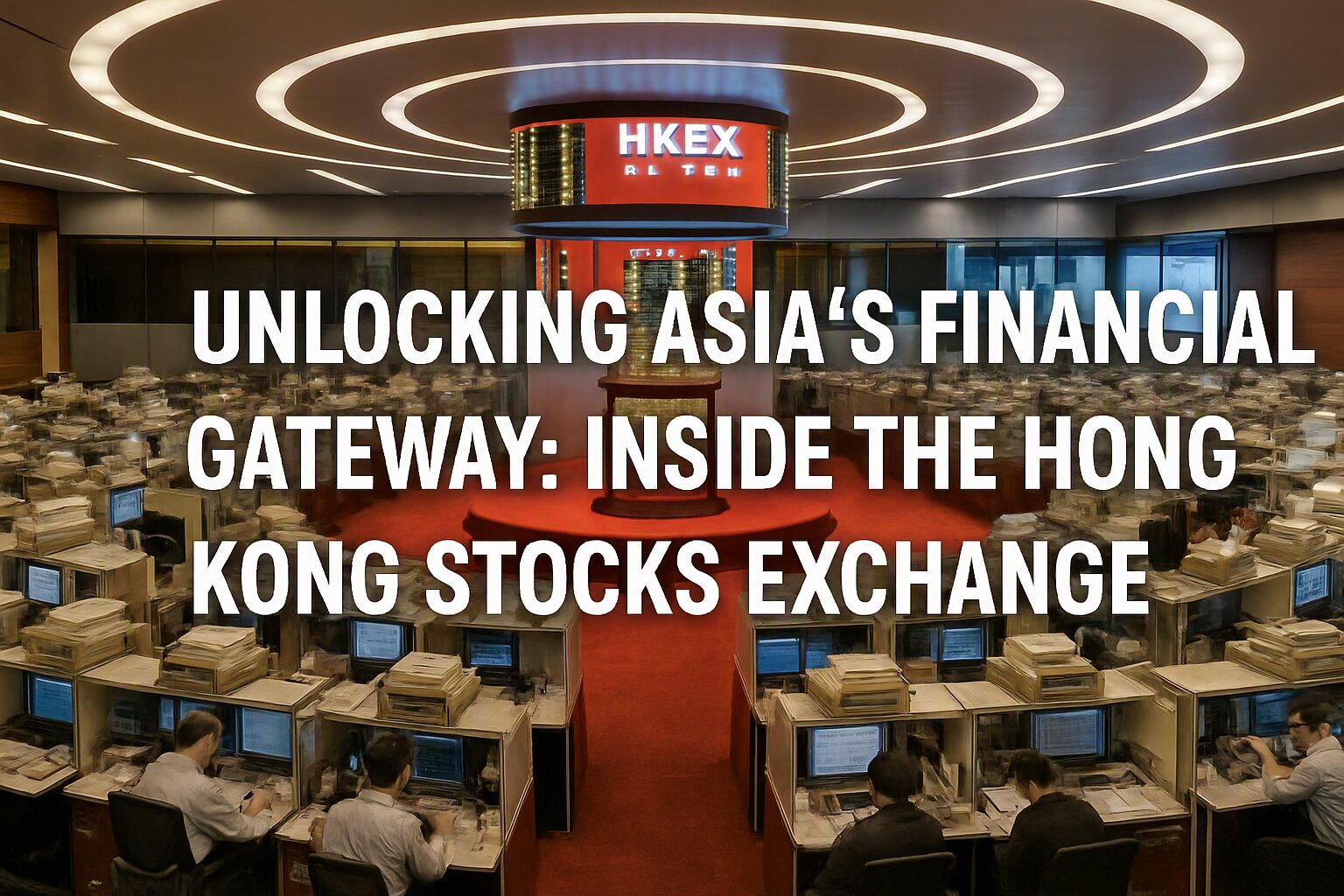
Unlocking Asia’s Financial Gateway: Inside the Hong Kong Stock Exchange
Are you leaving money on the table by ignoring Asia’s most dynamic financial markets? Capital flows through this region at a staggering pace, and at its center sits a massive financial engine. If you want exposure to Chinese growth and global diversification, you can’t afford to ignore the Hong Kong Stock Exchange. This premier marketplace seamlessly bridges mainland Chinese capital with international investors. As a result, it has become a critical hub for global finance, offering unique opportunities that Western exchanges cannot replicate.
Key Takeaways:
- The exchange ranks among the world’s top five by market capitalization.
- It serves as the primary conduit for foreign capital entering Chinese markets.
- Unique programs like Stock Connect link it directly to Shanghai and Shenzhen.
- The bourse is heavily weighted toward Chinese tech, finance, and real estate.
- Geopolitical tensions and regulatory shifts significantly impact its valuation.
From Trading Floor to Digital Powerhouse
This marketplace dates back to the late 19th century. However, the territory’s fragmented exchanges did not formally unify until 1986. This consolidation created a unified powerhouse capable of competing on the global stage. Furthermore, the transition from a physical trading floor to a fully electronic system in the early 2000s accelerated its growth. Today, Hong Kong Exchanges and Clearing Limited (HKEX) operates it, cementing its status as a modern digital marketplace.
Strategic Integration with Mainland China
Following the 1997 handover, the region’s financial infrastructure underwent a profound transformation. Consequently, Beijing’s financial opening policies transformed the territory into the primary conduit for foreign capital entering Chinese markets. Additionally, it became the preferred offshore listing destination for mainland Chinese corporations seeking foreign investment. As a result, the exchange today is dominated by companies that derive most of their revenue from mainland China.
How the Hong Kong Stock Exchange Operates
Market Structure and Listing Segments
The marketplace operates two primary listing boards. The Main Board caters to established companies that meet rigorous profitability and financial standards. Conversely, the GEM (Growth Enterprise Market) targets high-growth startups with lower financial thresholds but inherently higher risk profiles. In addition, the exchange mandates strict corporate governance standards across both segments to protect investors and maintain market integrity.
Trading Mechanisms and Settlement
Trading hours run from 9:30 AM to 4:00 PM Hong Kong Time, with a lunch break from noon to 1:00 PM. The settlement cycle follows a T+2 timeline, meaning trades settle two business days after the transaction date. The platform trades in Hong Kong Dollars (HKD), which is pegged to the US Dollar. Therefore, investors must always consider the implications of this fixed exchange rate regime when calculating returns.
Major Indices Driving the HKEX
The Hang Seng Index (HSI)
The HSI is the premier benchmark for the territory’s equity market. It tracks the exchange’s largest and most liquid companies. Currently, the index uses a free-float market-capitalization weighting methodology. As a result, giants like Tencent, Alibaba, and HSBC strongly influence the index’s daily movements, shaping overall market sentiment for regional investors.
Other Key Benchmarks
Beyond the HSI, the Hang Seng China Enterprises Index (HSCEI) measures the performance of mainland Chinese companies listed in Hong Kong, commonly known as H-shares. Furthermore, the relatively new Hang Seng Tech Index captures the territory’s booming technology sector, including players like Meituan and Xiaomi. Investors use these varied indices to gauge specific regional and sectoral exposures within the broader market.
The Connect Programs: Bridging East and West
Stock Connect
Launched in 2014, the Stock Connect program is a groundbreaking channel. It lets international investors trade eligible Shanghai and Shenzhen stocks directly on the exchange. Conversely, mainland Chinese investors can purchase territory-listed shares through their local brokers. This unprecedented two-way capital flow fundamentally changed how global investors access Chinese equities, bypassing traditional capital controls.
Bond Connect
Following Stock Connect’s success, the territory launched the Bond Connect program in 2017. It grants foreign investors streamlined access to China’s massive interbank bond market. As a result, the territory has solidified its role as the undisputed bridge between Western capital and mainland Chinese fixed-income assets.
Why Global Investors Flock to HKEX
The exchange offers unrivaled exposure to Chinese tech giants not listed on Western exchanges. Many of these companies also trade at significant valuation discounts compared to their US-listed counterparts. As a result, the territory has become a premier IPO destination, frequently topping global fundraising charts. In addition, the absence of capital gains taxes and dividend taxes adds to its allure for international capital seeking efficient returns.
Risks and Challenges
Geopolitical Tensions
US-China relations heavily influence market sentiment. For instance, the threat of delisting Chinese ADRs from US exchanges creates immense volatility. Furthermore, shifts in local governance and legal frameworks can rapidly alter the risk profile of exchange-listed investments, triggering sudden capital flight.
Currency and Regulatory Risks
While the HKD peg to the USD provides stability, it also means the territory must mirror US monetary policy regardless of its own domestic economic needs. Additionally, sudden regulatory crackdowns from Beijing—particularly targeting the tech and education sectors—can vaporize billions in market capitalization overnight. Consequently, investors must remain vigilant regarding policy shifts emanating from the mainland.
Frequently Asked Questions
What is the main difference between the Hong Kong Stock Exchange and HKEX?
The Hong Kong Stock Exchange (SEHK) refers specifically to the marketplace where equities are bought and sold. HKEX, or Hong Kong Exchanges and Clearing Limited, is the publicly traded parent company that owns the Stock Exchange of Hong Kong, the Hong Kong Futures Exchange, and the London Metal Exchange. Therefore, HKEX operates the physical and digital infrastructure.
Can foreign individual investors buy stocks on this exchange?
Yes, foreign individual investors can open brokerage accounts and trade shares on the exchange with few restrictions. However, they must comply with their local tax regulations and the broker’s onboarding requirements. Additionally, foreign investors are subject to mainland Chinese withholding taxes on dividends received from certain Chinese companies listed on the exchange.
What are Red Chips and H-Shares?
H-shares are companies incorporated in mainland China that are listed on the exchange. Red chips, conversely, are companies controlled by mainland Chinese governments or entities but are incorporated outside of mainland China, often in the territory itself or the Cayman Islands. As a result, red chips do not face the same foreign ownership restrictions as traditional H-shares.
How does Stock Connect work for everyday investors?
Stock Connect creates a mutual market access between the territory, Shanghai, and Shenzhen. It allows international investors to trade eligible mainland Chinese stocks through their local HKEX brokerage accounts. Conversely, mainland investors can trade eligible Hong Kong-listed shares through their local brokers. The process handles clearing and settlement automatically, making cross-border trading seamless.
What time does the Hong Kong market open and close?
The trading session opens at 9:30 AM Hong Kong Time and closes at 4:00 PM. The market has a one-hour lunch break from 12:00 PM to 1:00 PM, during which trading is suspended. As a result, active traders must account for this midday closure when planning their execution strategies.