

Imagine signing your dream home loan agreement, only to watch your monthly payments climb every few months. This is the harsh reality for millions when the central bank tightens its monetary policy. An RBI repo rate increase affects home loan borrowers immediately and profoundly, straining budgets and extending debt tenures. When the Reserve Bank of India raises the repo rate, borrowing costs rise across the banking system. Consequently, home loan Equated Monthly Installments (EMIs) rise, leaving borrowers scrambling to adjust their financial plans. Let us break down how this monetary shift affects your housing debt and what you can do to protect your finances.
Key Takeaways
- Direct Correlation: A repo rate hike immediately increases the cost of funds for banks, which they pass on to consumers via higher home loan interest rates.
- EMI Shock: Borrowers will face increased EMIs if the loan tenure remains constant, severely impacting monthly disposable income.
- Tenure Extension: To avoid EMI shock, borrowers often extend their loan tenure, resulting in significantly higher total interest outflow over the life of the loan.
- Floating Rate Vulnerability: Only borrowers with floating rate loans are directly affected; existing fixed-rate borrowers remain insulated until they hit a reset clause.
The Mechanics Behind the Repo Rate and Home Loan Connection
To understand how an RBI repo rate increase affects home loan repayments, you first need to understand the repo rate. The repo rate is the interest rate at which the RBI lends overnight to commercial banks. When this rate increases, banks pay more to borrow from the central bank.
Consequently, banks pass this higher cost of funds on to customers. For home loan borrowers, this translates directly into higher lending rates. Most modern home loans are linked to the External Benchmark Lending Rate (EBLR) or the Repo Linked Lending Rate (RLLR). Because these rates are directly tied to the RBI’s repo rate, any increase automatically triggers a proportional rise in your home loan interest rate.
How the RBI Repo Rate Increase Impacts Home Loan EMIs and Tenure
When interest rates rise, banks typically offer borrowers a choice: increase the EMI or extend the loan tenure. While raising the EMI puts immediate pressure on your monthly budget, extending the tenure drastically inflates the total interest paid over the life of the loan.
For instance, consider a ₹50 lakh home loan at 8% interest for 20 years. If the rate rises to 9%, your EMI increases by roughly ₹2,900. However, if you keep the EMI constant and extend the tenure, your loan might stretch by an additional 2 to 3 years. Therefore, analyzing the impact of an RBI repo rate increase on home loan structures requires looking beyond the monthly payment.
Floating vs. Fixed Rate Loans: Who Gets Hit Hardest?
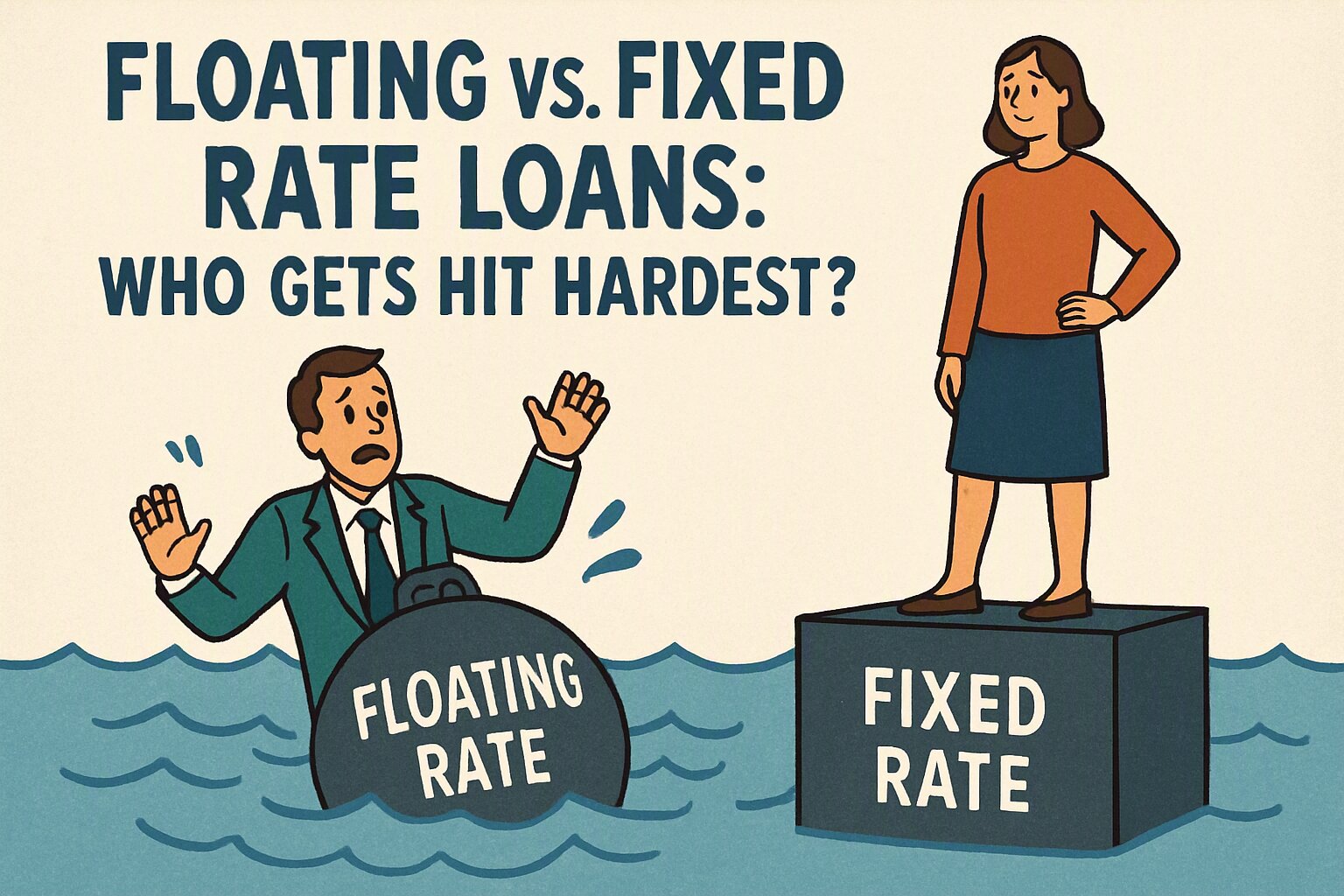
The impact of the RBI repo rate increase on Home Loan profiles depends heavily on the interest rate type you chose. Borrowers with floating-rate loans are the most vulnerable. As the name suggests, these rates fluctuate with the market benchmark. If the repo rate rises by 50 basis points, your floating rate will also rise by the same margin at the next reset date.
Conversely, borrowers with fixed-rate home loans are temporarily insulated. The interest rate remains locked for a predetermined period. However, there is a catch. Many loans marketed as “fixed” actually have a reset clause after 3 to 5 years. Furthermore, if you have a hybrid loan (fixed for the initial years, floating later), you will feel the pinch of the repo rate hike once the loan transitions to the floating component.
Strategic Moves to Mitigate Rising Interest Rates
Enduring a rising interest rate cycle does not mean you are powerless. You can adopt several strategies to minimize the impact of RBI repo rate increases on your Home Loan burden. The most effective approach is to make partial prepayments.
When you prepay a portion of your principal, you reduce the outstanding loan amount. As a result, the interest calculated on the remaining balance drops, which can help offset the higher interest rate. You can also explore a home loan balance transfer. If another bank offers a lower spread over the repo rate, transferring your outstanding balance can save you significant interest.
Furthermore, if your budget allows, increasing your EMI rather than extending your tenure is mathematically superior. While it tightens your monthly cash flow, it prevents a massive escalation in your total interest liability. Always use an EMI calculator to model different scenarios before deciding.
The Broader Economic Ripple Effect on Real Estate
The RBI repo rate increase affects home loan borrowers beyond individual budgets; it also cools the broader real estate market. As home loan EMIs rise, property affordability declines. First-time homebuyers often postpone purchases when borrowing costs surge.
This reduced demand can lead to stagnation or a correction in property prices. While this is bad news for investors and speculators, it may eventually create a window of opportunity for end-users looking to buy homes at more rationalized prices. However, the high cost of borrowing usually outweighs the benefit of a marginal price correction, keeping the real estate market subdued during rate hike cycles.
Frequently Asked Questions (FAQs)
How quickly does a repo rate hike affect my home loan EMI?
For loans linked to the repo rate (RLLR) or external benchmark, banks typically reset the interest rate on a quarterly or monthly basis. Therefore, you will likely see the RBI repo rate increase reflected in your home loan EMI within one to three months of the RBI’s policy announcement, depending on your bank’s specific reset cycle.
Should I increase my EMI or extend my tenure when rates rise?
Financial experts generally recommend increasing the EMI rather than extending the tenure. While extending the tenure keeps your monthly payments manageable, it can cause your total interest outflow to skyrocket. Increasing the EMI ensures you pay off the principal faster, reducing the overall interest burden despite the higher rates.
Can I switch from a floating to a fixed rate loan during a rate hike cycle?
Yes, most banks allow you to switch from a floating to a fixed rate, but they levy a conversion fee, typically ranging from 0.5% to 2% of the outstanding principal. Also, fixed-rate loans usually carry a higher interest rate than floating rates, so switching permanently may not always be cost-effective.
Does a repo rate increase impact existing home loan borrowers?
Absolutely. If you have an existing home loan with a floating interest rate, a repo rate increase will directly impact you. Your bank will revise your interest rate upward, leading to higher EMIs or an extended loan tenure. Only those with strictly fixed-rate loans (without reset clauses) are immune to these changes.