
What happens when artificial intelligence meets blockchain-based ownership? You get a paradigm shift that fundamentally redefines who creates, who owns, and who profits from digital content. Muse Meta: the Convergence of AI Creativity and Decentralized Ownership represents this exact intersection. In this framework, generative AI tools empower creators while decentralized protocols ensure they retain full control over their work.
For years, creators have faced an impossible trade-off. AI platforms offered powerful generation capabilities but demanded centralized control. Decentralized networks promised ownership but lacked intuitive creative tools. This convergence eliminates that compromise entirely.
Key Takeaways
- ✅ Muse Meta merges generative AI capabilities with blockchain-verified ownership structures
- ✅ Creators maintain sovereignty over their AI-generated assets through tokenized provenance
- ✅ Smart contracts automate royalty distribution without intermediary platforms
- ✅ Decentralized governance gives creative communities voting power over platform evolution
- ✅ This model addresses the fundamental attribution problem in AI-generated content
The Broken Promise of Centralized AI Creative Tools
Traditional AI art generators and content platforms operate on a simple premise: you provide prompts, they provide outputs. However, the fine print tells a different story. Most platforms claim broad licenses over generated content, effectively building their business models on creator output without equitable compensation.
Furthermore, these centralized systems create single points of failure. When a platform changes its terms of service, shutters operations, or suffers a data breach, creators lose access to their work and their audience overnight. The fundamental problem isn’t the technology — it’s the ownership architecture surrounding it.
As a result, a growing movement of developers and artists has begun building alternatives. These alternatives prioritize creator sovereignty without sacrificing the power of machine learning models. This movement is what Muse Meta conceptualizes and, increasingly, what several emerging platforms are implementing.
How Decentralized Ownership Transforms Creative Workflows
Decentralized ownership in creative contexts means three specific things. First, provenance is cryptographically verifiable. Every asset carries an immutable on-chain record of its creation, modifications, and ownership history. Second, ownership transfers peer-to-peer without gatekeepers. Third, programmable royalties ensure creators earn from secondary sales automatically.
Consider a practical example. A digital artist uses an AI-assisted tool to generate a series of compositions. Under a centralized model, the platform could freely license those works. Under a decentralized model, the artist mints each piece as a unique token, embedding royalty logic directly into the asset’s smart contract.
Therefore, every time that piece resells on a secondary market, the original creator receives their programmed percentage. This isn’t theoretical — it’s already functioning across multiple blockchain networks today.
The Technical Stack Powering This Convergence
Several technological layers make this possible. At the base, decentralized storage networks like IPFS and Arweave ensure that creative assets aren’t locked behind a single server. Above that, smart contract platforms — primarily Ethereum, Solana, and emerging Layer-2 solutions — handle ownership logic and transaction execution.
The AI layer sits on top, integrating with these decentralized backends through APIs and oracle networks. Crucially, the AI models themselves can be governed by decentralized autonomous organizations (DAOs), meaning the community of creators and stakeholders votes on model training data, output policies, and feature development.
This stack creates a self-reinforcing ecosystem. Better tools attract more creators. More creators generate more value. More value funds further development. And because ownership is distributed, no single entity can extract disproportionate value from the network.
Real-World Applications and Platforms Leading the Charge
While Muse Meta represents the conceptual framework, several platforms are actively implementing these principles. Mirror pioneered decentralized publishing with built-in monetization. Zora created an open marketplace where creators mint and trade media with embedded royalties. Arweave’s permanent storage layer ensures creative works survive indefinitely.
More specifically, platforms like Braind and Livepeer demonstrate how AI-powered video and streaming tools can operate on decentralized infrastructure. These aren’t hypothetical projects — they process millions of dollars in transactions monthly.
In addition, emerging platforms are building AI generation tools where the models themselves are community-owned. This means when the model generates revenue through usage fees, token holders — not venture capitalists — receive the returns. The alignment between creators, tool developers, and platform operators becomes structural rather than contractual.
Addressing the Attribution Problem in Generative AI
One of the most persistent criticisms of generative AI is its training data problem. Models learn from vast datasets, often without compensating or crediting the original creators. Muse Meta’s decentralized approach offers a structural solution to this ethical dilemma.
By recording training data contributions on-chain, models can attribute influence and distribute rewards proportionally. If a particular artist’s work significantly influences a generated output, smart contracts can automatically route compensation to that artist. This creates a fairer ecosystem where training data becomes an income-generating asset rather than an exploited resource.
Moreover, creators can opt into or out of training datasets transparently. This opt-in model, enforced by code rather than policy, represents a fundamental shift in how AI companies source their training material.
Economic Models: From Platform Extraction to Network Participation
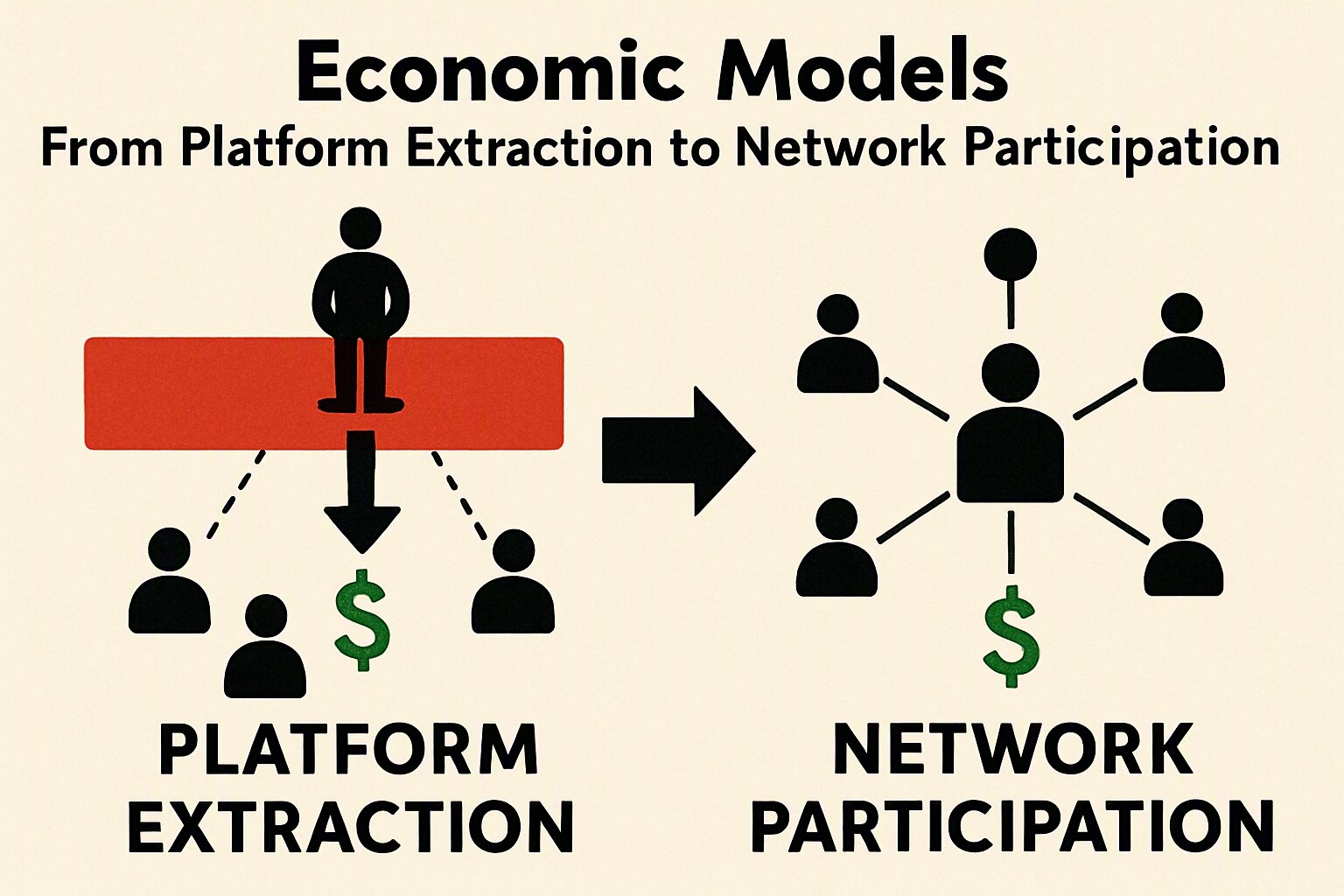
The economic implications of this convergence extend far beyond individual creator earnings. Traditional platforms extract value through advertising, data monetization, and subscription fees. Decentralized alternatives distribute value through token-based incentive structures.
Here’s how it works in practice. A decentralized AI creative platform might issue a governance token. Creators earn tokens through content creation, curation, and community participation. Token holders vote on platform upgrades, fee structures, and treasury allocation. The platform’s success directly benefits its most active participants.
Consequently, the relationship between platform and creator transforms from extractive to collaborative. Growth isn’t measured solely by user acquisition but by the economic wellbeing of the creative community sustaining the network.
Overcoming Adoption Barriers
Despite its promise, this convergence faces real obstacles. User experience remains the primary barrier. Managing wallets, gas fees, and private keys creates friction that centralized platforms simply don’t have. However, account abstraction and gasless transaction solutions are rapidly closing this gap.
Another challenge is discoverability. Centralized platforms algorithmically surface content, which — despite its flaws — drives engagement. Decentralized alternatives must build equivalent discovery mechanisms without recreating centralized control. Community-driven curation, token-incentivized recommendations, and decentralized identity systems offer promising paths forward.
Finally, regulatory uncertainty around digital assets and AI-generated content creates compliance complexity. Platforms operating in this space must navigate securities law, intellectual property frameworks, and evolving AI regulations simultaneously.
The Future Trajectory of AI-Powered Creative Sovereignty
Looking ahead, the convergence of AI creativity and decentralized ownership will likely accelerate along several vectors. Interoperability between platforms will improve, allowing creators to move assets seamlessly across ecosystems. AI models will become more specialized, trained on community-curated datasets that reflect specific aesthetic values and cultural contexts.
Furthermore, fractional ownership will expand. Instead of a single creator owning an entire work, collaborative AI projects can distribute ownership among all contributors — prompt engineers, model trainers, curators, and community validators. This granular attribution becomes possible only through programmable blockchain infrastructure.
The ultimate vision is a creative economy where AI amplifies human expression rather than replacing it, and where the value generated flows to the people doing the creating. That’s not a distant utopia — it’s the practical outcome of the architectural choices being made right now.
Getting Started: Practical Steps for Creators
If you’re a creator interested in this space, start with these actionable steps. First, establish a self-custody wallet and familiarize yourself with a major blockchain network. Ethereum and Solana offer the most mature ecosystems for creative assets.
Second, experiment with decentralized minting platforms. Mint a small piece of content — even a simple image or text — to understand the process firsthand. This demystifies the technology and reveals its practical implications.
Third, join DAOs and community governance processes. The cultural norms, technical standards, and economic models of this space are being shaped right now by active participants. Your voice and vote matter in determining how these systems evolve.
Finally, think critically about where your creative output currently lives. If it’s locked inside a centralized platform with restrictive terms, explore migration paths. The tools exist today to reclaim ownership of your digital legacy.
Frequently Asked Questions
What exactly is Muse Meta in the context of AI and decentralized ownership?
Muse Meta represents the conceptual and practical convergence of generative AI creative tools with blockchain-based decentralized ownership structures. It describes a framework where creators use AI to generate content while maintaining verifiable, programmable ownership over their outputs through tokenization and smart contracts. Rather than a single product, it’s an emerging paradigm that multiple platforms are implementing in various forms.
How does decentralized ownership protect AI-generated creative work?
Decentralized ownership protects AI-generated work through cryptographic provenance recorded on blockchain networks. Each asset carries an immutable creation history, and smart contracts enforce usage rights and royalty distributions automatically. This means creators can verify authorship, control how their work is used, and earn from secondary sales without relying on a central authority to enforce these rights.
Can creators actually earn royalties from AI-generated content on decentralized platforms?
Yes, creators can earn programmable royalties through smart contracts embedded in their minted assets. When an AI-generated piece resells on a secondary market, the smart contract automatically routes a predetermined percentage back to the original creator. This happens without intermediaries, payment delays, or the creator needing to track or enforce payment manually.
What are the main challenges facing the adoption of decentralized AI creative platforms?
The primary challenges include user experience complexity around wallet management and transaction fees, discoverability without centralized algorithms, and regulatory uncertainty surrounding digital assets and AI-generated content. However, solutions like account abstraction, gasless transactions, and community-driven curation are rapidly addressing these barriers.
How does this model solve the AI training data attribution problem?
By recording training data contributions on-chain, decentralized systems can attribute influence and distribute rewards proportionally to original creators. If an artist’s work significantly influences a generated output, smart contracts can automatically compensate them. This creates an opt-in model where training data becomes an income-generating asset rather than an exploited resource.