
Table of Contents
1. Introduction
Importance of Technology in Modern Rail Systems
Technology has become an essential part of modern railway transportation, helping railway operators improve safety, efficiency, reliability, and passenger experience. As railway networks become larger and train services become more frequent, traditional signaling and manual monitoring systems alone may not be sufficient to manage every operational situation.
Modern railway technology combines signaling systems, communication networks, sensors, positioning technologies, and automated controls to provide railway operators with better information about train movements. These technologies can help detect potential risks, improve traffic management, and support faster responses to dangerous situations.
Around the world, railway networks are adopting advanced train protection and control technologies. Systems such as the European Train Control System (ETCS) and Positive Train Control (PTC) demonstrate how digital technologies can be integrated into railway operations to reduce the risk of collisions and overspeeding.
Introduction to Kavach as a Technological Innovation
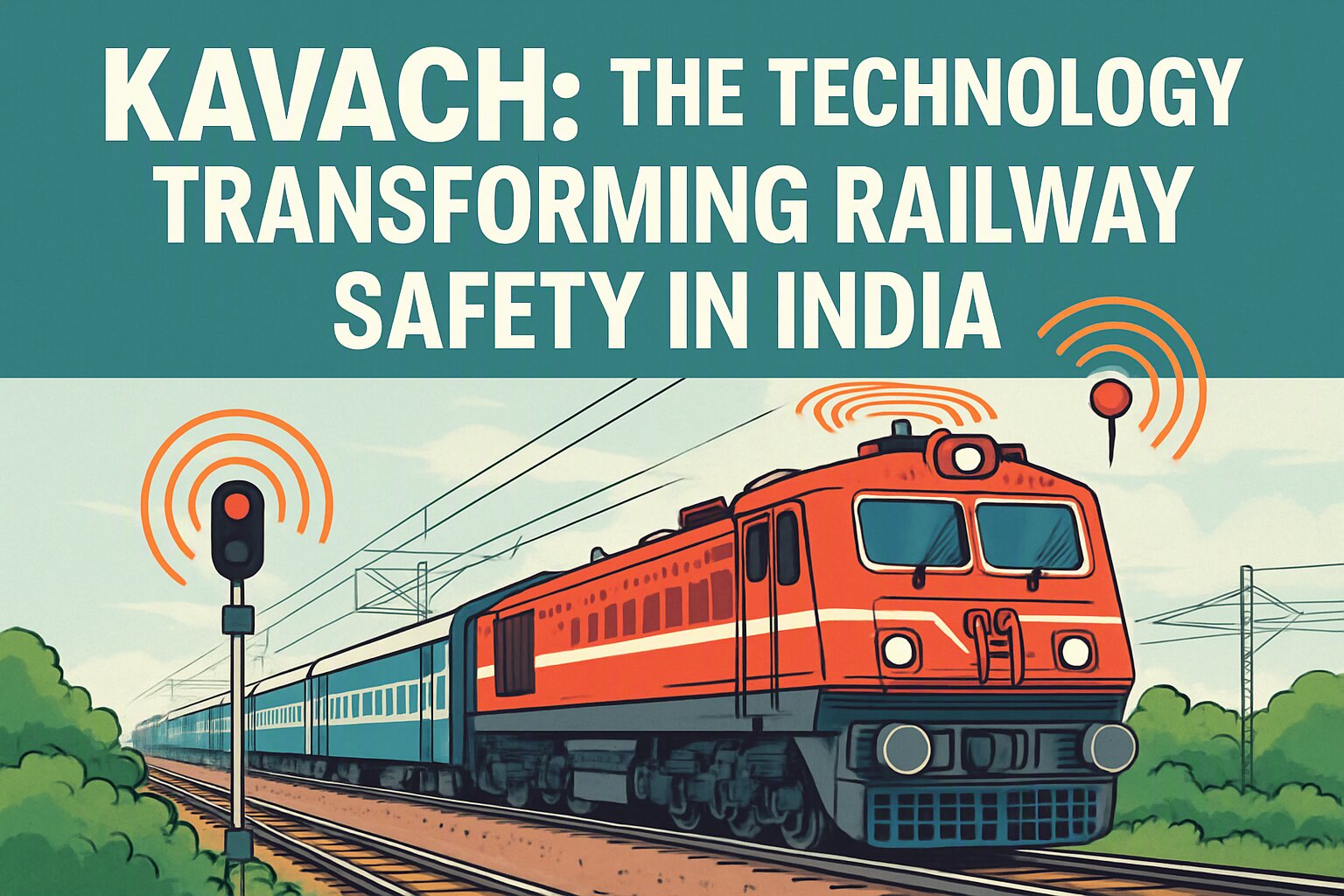
Kavach is an Automatic Train Protection (ATP) system developed for Indian Railways. Its primary purpose is to assist in preventing train collisions and other accidents caused by situations such as signal violations or excessive speed.
The system is particularly significant for India because Indian Railways operates one of the world’s largest railway networks. Millions of passengers and large quantities of freight travel across the network every day. Managing such a complex system requires technologies capable of supporting train drivers, signaling personnel, and railway control centers.
Kavach is designed to work with railway signaling and train-control infrastructure to provide automatic protection when potentially dangerous situations are detected.
2. Core Technologies Used in Kavach
Overview of the Technologies
Kavach combines several technologies and railway systems rather than depending on a single technology. These include train-positioning methods, onboard equipment, trackside equipment, radio communication, signaling interfaces, and automatic braking functions.
The combination allows information about train movement and signaling conditions to be exchanged between trains and railway infrastructure.
GPS and Train Positioning Technology
Positioning technology plays an important role in identifying the location and movement of trains. Kavach-equipped trains use positioning information along with railway-specific identification and trackside information to determine operational conditions.
This information can help the system understand where a train is operating and support calculations related to speed, distance, and movement authority.
However, railway safety systems cannot rely on satellite positioning alone. Railway tracks have specific layouts, signaling arrangements, and operational rules, so positioning information must work together with other railway equipment and infrastructure.
Sensor and Detection Technology
Sensors and onboard equipment help Kavach collect information about train speed, movement, braking conditions, and signaling-related events.
Speed information is particularly important because a train traveling faster than the permitted speed may require an automatic intervention. By continuously monitoring operational conditions, the system can determine whether a train is approaching a potentially unsafe situation.
Trackside equipment also helps communicate relevant information to passing trains. This creates an additional layer of protection beyond the driver’s visual observation and conventional signaling.
Communication Systems
Reliable communication is another important component of an automatic train protection system. Kavach uses radio-based communication between onboard and trackside equipment to exchange operational information.
Real-time communication can allow relevant information to reach the train without depending entirely on manual communication between railway personnel.
When properly configured and maintained, these communication links can help the system respond to changing railway conditions and support automatic safety functions.
How These Technologies Contribute to Safety
The technologies used by Kavach work together to create an additional safety layer.
Positioning and train-movement information help establish where a train is operating. Sensors and onboard equipment monitor speed and other operational parameters. Communication systems allow information to be exchanged between trains and railway infrastructure. The braking system can then intervene when defined safety conditions are violated.
The overall objective is to reduce the possibility that a human error or delayed reaction will develop into a serious accident.
3. Integration with Existing Railway Systems
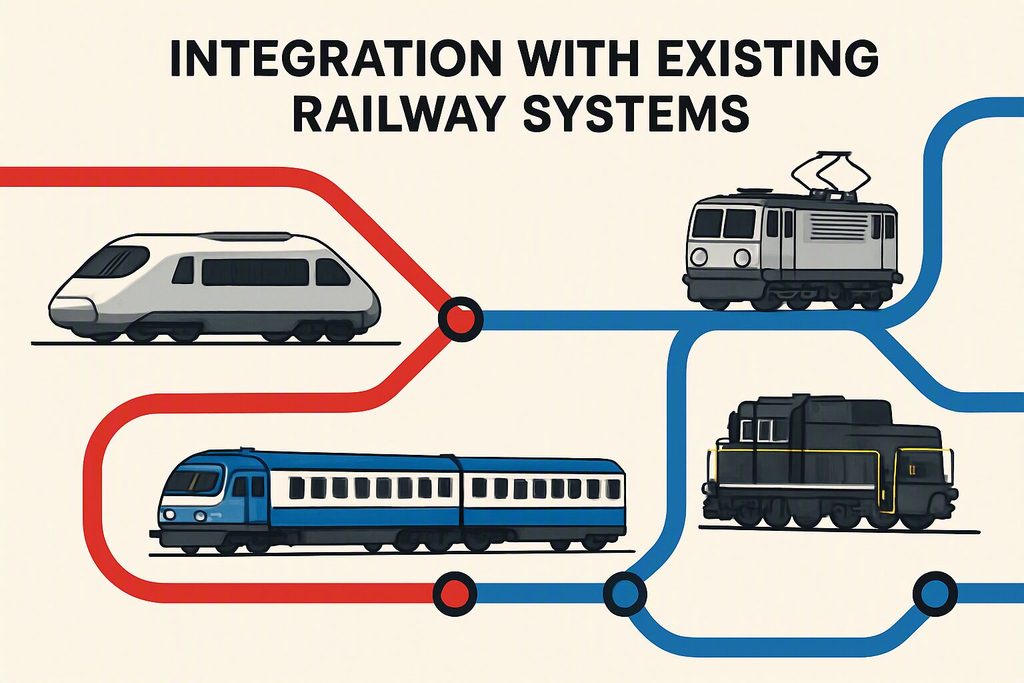
How Kavach Integrates with Current Railway Infrastructure
Kavach is designed to operate alongside existing railway signaling and operational systems rather than requiring the entire railway network to be replaced.
Implementation can involve installing onboard equipment on locomotives, trackside equipment along railway routes, communication infrastructure, and interfaces with signaling systems.
The system must also account for railway-specific information such as signal aspects, permitted speeds, track layouts, and movement authorities.
This makes integration a complex engineering process because every railway route has its own infrastructure, signaling arrangements, operational characteristics, and maintenance requirements.
Challenges During Integration and Possible Solutions
Deploying an advanced railway protection system across a large network presents several challenges.
One challenge is infrastructure compatibility. Different railway sections may use different signaling technologies and equipment. Kavach therefore needs to be integrated carefully with existing systems.
Another challenge is the scale of deployment. Installing and testing equipment across thousands of kilometers of railway track requires extensive planning, engineering work, testing, and coordination.
Weather, terrain, network connectivity, maintenance requirements, and equipment reliability can also affect implementation.
These challenges can be addressed through phased deployment, route testing, equipment standardization, staff training, regular maintenance, and systematic safety validation.
4. Real-Time Monitoring and Response
Real-Time Data Processing Capabilities
Kavach continuously processes information related to train movement, speed, signaling conditions, and other operational parameters.
The system uses this information to determine whether the train is operating within predefined safety conditions. When a potentially dangerous condition is detected, the system can issue warnings and, under specified circumstances, initiate automatic braking.
This real-time processing is important because railway safety decisions often depend on distance, speed, and timing. A delayed response can significantly increase the difficulty of stopping a moving train.
How Kavach Can Improve Emergency Response
Consider a situation in which a train approaches a signal that requires it to stop. If the driver fails to respond appropriately, the train protection system can detect the relevant condition and provide an additional layer of intervention.
Similarly, if a train exceeds a permitted speed and does not slow down as required, automatic braking can be triggered according to the system’s safety logic.
These functions are intended to reduce dependence on human reaction time in critical situations.
Kavach should therefore be viewed as a complementary safety system rather than a replacement for railway drivers, controllers, signaling personnel, or established operational procedures.
5. Comparative Analysis
Kavach and Railway Safety Systems in Other Countries
Several countries have developed advanced train protection systems.
The European Train Control System (ETCS) is used across many European railway networks and has been developed as a standardized system for train control and protection. ETCS can provide continuous monitoring of train speed and movement authority and can automatically intervene when necessary.
In the United States, Positive Train Control (PTC) was developed to address specific safety risks, including train-to-train collisions, overspeed derailments, unauthorized movement into work zones, and movement through incorrectly positioned switches.
Kavach addresses similar broad safety objectives while being developed specifically for the operating environment and requirements of Indian Railways.
The systems differ in technical architecture, implementation models, communication technologies, regulatory frameworks, and deployment strategies. Direct comparisons therefore need to consider the railway environment in which each system operates.
Lessons Learned and Potential Improvements
International railway protection systems demonstrate the importance of interoperability, standardized equipment, reliable communication, continuous monitoring, and rigorous testing.
As Kavach expands, further improvements could focus on wider network coverage, greater interoperability, improved communication reliability, enhanced diagnostics, easier maintenance, and integration with increasingly digital railway infrastructure.
Future development could also involve advanced analytics and improved monitoring capabilities while maintaining the high reliability and safety standards required for railway operations.
6. Conclusion
Kavach’s Technological Significance
Kavach represents an important step toward increasing the use of automated safety technology within India’s railway network.
By combining train-positioning information, sensors, communication systems, signaling information, onboard equipment, and automatic braking, the system provides an additional layer of protection during train operations.
Its significance goes beyond any single piece of equipment. The effectiveness of a railway safety system depends on the coordinated operation of onboard technology, trackside infrastructure, communication networks, signaling systems, trained personnel, maintenance teams, and established safety procedures.
Future Trends in Railway Safety Technology
Railway safety technology is likely to become increasingly connected and automated. Future developments may include more advanced digital signaling, improved communication networks, artificial intelligence-assisted monitoring, predictive maintenance, better onboard diagnostics, and increasingly integrated railway control systems.
For India, the continued expansion and refinement of technologies such as Kavach could contribute to the modernization of railway operations. At the same time, successful deployment will depend on careful testing, infrastructure investment, interoperability, cybersecurity, maintenance, and continuous evaluation.
As railway networks around the world become more technologically advanced, automated train protection systems are likely to remain an important part of efforts to make rail transportation safer, more reliable, and more efficient.