
Beyond Rockets: Why AI Compute Infrastructure is the New Frontier for Business
13-15 Minute Read
Key Takeaways
- SpaceX’s revenue diversification reveals AI compute infrastructure as a core driver, surpassing traditional space ventures and signaling a profound shift in the modern economy.
- Advanced AI models, including Large Language Models (LLMs) and generative AI, possess an insatiable demand for computational power, making specialized hardware like GPUs a strategic asset.
- The rise of cloud providers and “compute rental” services democratizes access to powerful AI capabilities, enabling businesses of all sizes to innovate without massive upfront capital investment.
- For businesses, strategic utilization, optimization of AI models, and cultivating an AI-ready culture are crucial for translating raw compute power into tangible business value, efficiency, and competitive advantage.
- Proactive engagement — assessing needs, leveraging cloud solutions, optimizing workflows, and seeking expert guidance — is imperative for businesses to harness AI effectively and secure their future in the intelligent economy.
Table of Contents
- The Unseen Engine: Why AI Compute Infrastructure is the New Frontier
- The Insatiable Appetite of AI: Understanding the Demand for Compute
- From Raw Power to Strategic Advantage: Business Implications of AI Compute Infrastructure
- Navigating the AI Landscape: Practical Takeaways for Your Business
- AITechScope’s Role: Bridging the Gap Between Compute Power and Business Value
- The Future is Here: Act Now to Harness AI Compute Infrastructure
The landscape of technology is shifting at an unprecedented pace, and sometimes, the most telling signs of this evolution come from unexpected places. When you hear the name SpaceX, your mind likely conjures images of powerful rockets, daring Mars missions, and the audacious vision of space exploration. Yet, a recent earnings statement from Elon Musk’s enterprise reveals a fascinating pivot, illustrating a profound truth about the modern economy: the true gold rush isn’t just in space, but in the unseen, yet utterly critical, realm of AI compute infrastructure.
According to a report from The Verge discussing SpaceX’s first quarterly earnings statement as a public company, a surprising reality emerged. The space sector, synonymous with the company’s brand, contributed a mere fraction—just over 10 percent—of its total revenue. What, then, is driving the financial engine of this once space-focused behemoth? Primarily, it’s a telecom company, and more significantly for our discussion, a company that rents compute. This acquisition of xAI, Musk’s AI venture, which was once considered “sickliest,” by his “healthiest” company, SpaceX, now makes more sense in this context. It’s a clear signal that the company is diversifying rapidly into foundational technologies, with AI compute infrastructure at its very core. This development isn’t just an interesting footnote in corporate strategy; it’s a powerful testament to the escalating demand for the raw processing power that fuels artificial intelligence, underscoring its critical importance for businesses across all sectors.
For business professionals, entrepreneurs, and tech-forward leaders, this paradigm shift carries immense implications. It highlights that the ability to harness and deploy AI is increasingly dependent on access to robust, scalable, and efficient computing resources. Understanding this trend, and strategically positioning your business to leverage it, is no longer optional—it’s imperative for survival and growth in the intelligent economy.
The Unseen Engine: Why AI Compute Infrastructure is the New Frontier
The revelation about SpaceX’s revenue composition — primarily driven by telecom and compute rental rather than rocket launches — is a powerful indicator of a much broader industry trend. It’s a microcosm of how infrastructure underpins even the most visionary technological endeavors. The company’s strategic move, including the integration of xAI, points to an understanding that while the applications of AI are diverse and exciting, they are utterly reliant on a foundational layer of intense computational capability. This fundamental necessity, the AI compute infrastructure, has become the new frontier.
Artificial intelligence, particularly in its most advanced forms like large language models (LLMs), generative AI, and complex machine learning algorithms, possesses an insatiable appetite for data and processing power. Training these models involves feeding them astronomical datasets, a process that requires trillions of operations performed across thousands of specialized chips working in parallel for weeks or even months. Once trained, these models still demand significant compute for inference – the act of using the model to make predictions or generate outputs in real-time. Whether it’s a virtual assistant understanding natural language, an AI-powered analytics platform sifting through vast quantities of market data, or an automated system optimizing supply chains, the underlying engine is always high-performance compute.
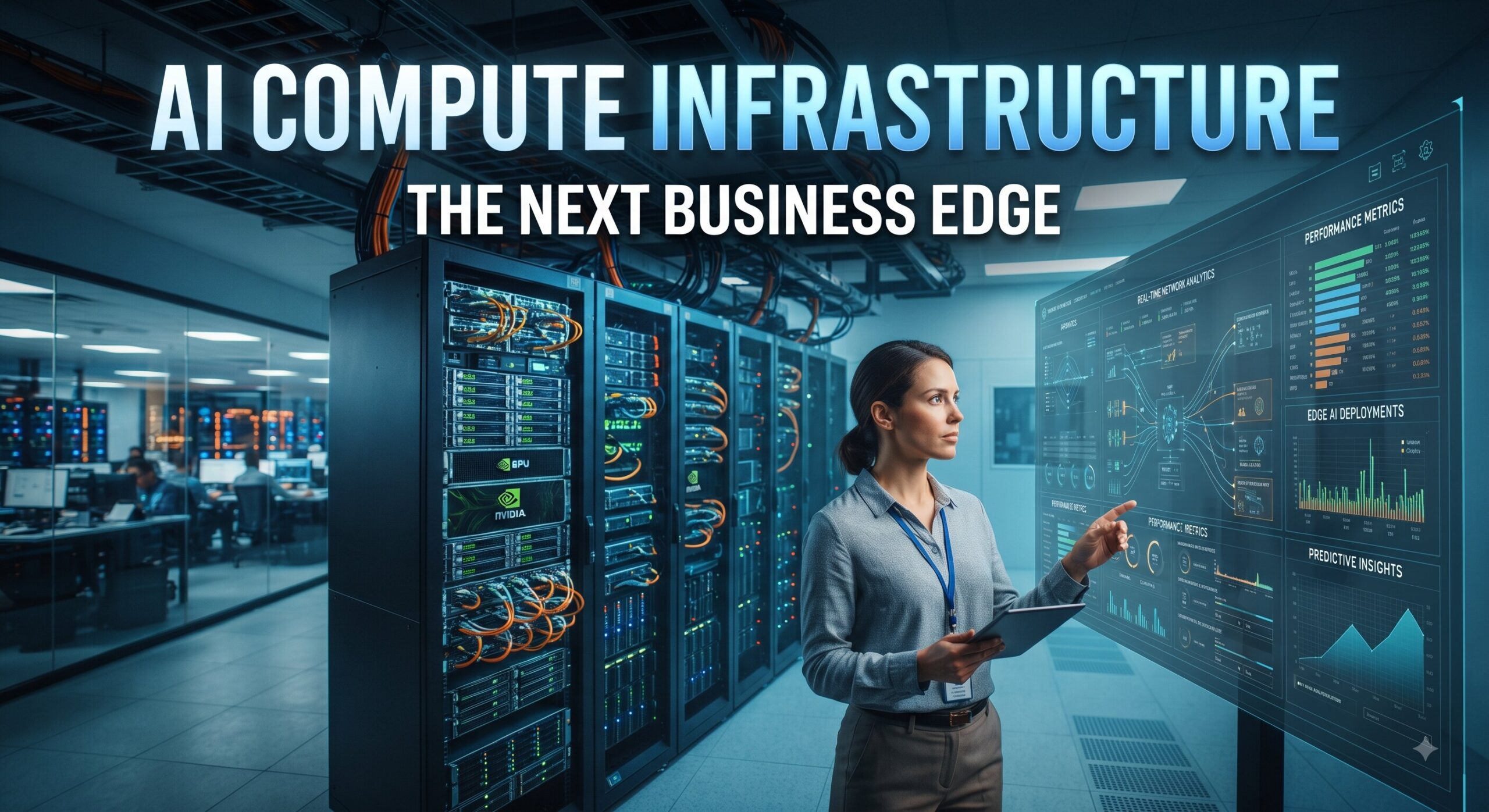
This extreme demand has transformed computing from a mere IT cost center into a strategic asset. Traditional CPUs, while versatile, often struggle to keep up with the parallel processing needs of deep learning. This has led to the rise of specialized hardware like Graphics Processing Units (GPUs), Tensor Processing Units (TPUs), and custom AI accelerators. Companies are not just buying more servers; they are investing in entire data centers optimized for AI workloads, often running on renewable energy to manage the immense power draw. The “compute rental” aspect of SpaceX’s business, whether directly through its own infrastructure or indirectly via partnerships, positions it squarely in the center of this burgeoning market. This isn’t just about selling space travel; it’s about providing the digital bedrock for the next generation of technological innovation.
The strategic shift observed in a company like SpaceX underscores that access to cutting-edge AI compute infrastructure is becoming a critical competitive advantage. It signals a future where raw computational power is as vital as reliable internet access or electricity – a fundamental utility that fuels digital transformation. For businesses, this means understanding not just what AI can do, but how it’s done, and ensuring they have the means to access or effectively leverage the necessary compute resources.
The Insatiable Appetite of AI: Understanding the Demand for Compute
To truly grasp the significance of the shift exemplified by SpaceX, it’s essential to delve deeper into why AI demands such colossal computational power. It’s not simply a matter of faster processors; it’s a paradigm shift in how computing resources are utilized and designed.
The core of modern AI, especially deep learning, relies on neural networks. These networks are mathematical structures inspired by the human brain, composed of layers of interconnected “neurons.” Training these networks involves a process called backpropagation, where the network processes vast amounts of data, makes predictions, compares them to actual outcomes, and then adjusts the “weights” of its connections to reduce errors. This iterative process, repeated billions or even trillions of times, is computationally intensive. Each adjustment, each forward and backward pass, involves complex matrix multiplications and other linear algebra operations, demanding massive parallel processing capabilities.
This is where specialized hardware comes into play. General-purpose CPUs are excellent for sequential tasks, but less efficient for the parallel operations characteristic of deep learning. GPUs, originally designed to render complex graphics simultaneously, were serendipitously discovered to be incredibly effective at these parallel matrix calculations. This led to their widespread adoption in AI, and subsequently, to the development of even more specialized chips like Google’s TPUs and various custom AI accelerators from companies like NVIDIA, AMD, and Intel. These chips are purpose-built to execute AI workloads with maximum efficiency, driving down training times and energy consumption for specific tasks.
The physical manifestation of this demand is the proliferation of hyperscale data centers. These aren’t just server farms; they are sprawling complexes designed with advanced cooling systems, robust power grids, and intricate networking to support thousands of high-performance GPUs. The energy consumption of these facilities is staggering, leading to increased focus on energy efficiency, renewable power sources, and even innovative cooling techniques like liquid immersion. The economics are equally profound: the cost of acquiring, maintaining, and upgrading this infrastructure is immense, creating high barriers to entry for smaller players and making compute rental a lucrative business model, as SpaceX has clearly identified.
The sheer scale of data processing required for training and operating advanced AI models is difficult to overstate. A single large language model like GPT-3 was trained on hundreds of billions of words, requiring thousands of petaflops (quadrillions of floating-point operations per second) for weeks. Imagine the compute needed for its successors and the specialized models being developed today for specific industries. This isn’t a temporary peak; it’s a foundational demand that will only grow as AI becomes more sophisticated and integrated into every facet of business and life. Businesses must acknowledge this underlying dependency, recognizing that their AI ambitions are directly tethered to their ability to access and utilize adequate AI compute infrastructure.
From Raw Power to Strategic Advantage: Business Implications of AI Compute Infrastructure
The emergence of AI compute infrastructure as a primary revenue driver for a company like SpaceX signals a pivotal moment for businesses globally. This isn’t just a technical detail for IT departments; it’s a strategic imperative that will shape competitive landscapes and redefine operational capabilities. Understanding these implications is crucial for any business leader looking to thrive in the AI era.
One of the most significant implications is the democratization of AI. While building and maintaining your own cutting-edge AI data center is prohibitively expensive for most, the rise of cloud providers and companies offering “compute rental” makes powerful AI capabilities accessible to businesses of all sizes. Instead of massive capital expenditure, businesses can leverage flexible operational expenditure models, scaling their compute resources up or down as needed. This means even small and medium-sized enterprises (SMEs) can tap into the same raw processing power that once only large tech giants could afford, leveling the playing field for innovation.
This accessibility fuels a new wave of digital transformation. Historically, digital transformation focused on digitizing processes and adopting software solutions. Today, it extends to integrating intelligent automation and decision-making capabilities powered by AI. Robust compute infrastructure enables real-time analytics for instantaneous insights, predictive maintenance for operational resilience, hyper-personalized customer experiences that adapt on the fly, and sophisticated fraud detection systems that protect assets. Without sufficient compute, these advanced applications remain theoretical. With it, they become tangible drivers of efficiency and competitive differentiation.
Furthermore, access to scalable AI compute infrastructure allows businesses to scale AI initiatives rapidly. Imagine a startup developing an innovative AI-powered diagnostic tool. If their initial success demands a sudden increase in users and data, their ability to scale quickly is entirely dependent on readily available compute. Companies that are locked into rigid, insufficient infrastructure will quickly hit bottlenecks, hindering growth and market capture. The flexibility offered by compute rental services ensures that businesses can respond to market demands and expand their AI offerings without being constrained by physical limitations.
Finally, the focus on compute also underscores the importance of operational efficiency. While raw power is essential, intelligently utilizing that power is equally critical. Businesses need to consider not just acquiring compute, but optimizing their AI models and workflows to run efficiently. This involves smart algorithm design, data compression, efficient data pipelines, and intelligent resource allocation. A powerful engine is only as good as the driver behind the wheel. The strategic advantage lies not just in having access to the best compute, but in having the expertise to deploy it effectively to generate maximum business value.
Navigating the AI Landscape: Practical Takeaways for Your Business
Given the profound shift towards AI compute infrastructure as a foundational element of the modern economy, how can business professionals, entrepreneurs, and tech-forward leaders proactively navigate this landscape? The implications for strategic planning and resource allocation are significant.
- Assess Your True AI Compute Needs: Don’t get swept up in the hype of acquiring the most powerful hardware just for the sake of it. Begin by clearly defining your AI goals and the specific applications you intend to deploy. Are you training large, bespoke models, or primarily performing inference on existing ones? Are your applications real-time, or can they tolerate batch processing? Understanding your specific workload requirements will guide your compute strategy, ensuring you invest in or rent resources that are truly necessary and cost-effective. A tailored approach is always more efficient than a blanket one.
- Strategically Leverage Cloud and Compute-as-a-Service: For the vast majority of businesses, building and maintaining proprietary AI data centers is neither feasible nor advisable. The strategic move is to embrace cloud computing providers (AWS, Azure, Google Cloud) or specialized compute rental services (like what SpaceX is effectively providing). These platforms offer unparalleled scalability, access to cutting-edge hardware (GPUs, TPUs), and managed services that abstract away much of the underlying complexity. Focus on securing agreements that offer flexibility, cost efficiency, and the ability to scale on demand, allowing your business to remain agile without massive upfront capital expenditure.
- Prioritize AI Model and Workflow Optimization: Access to powerful compute is only half the battle. The other half is ensuring your AI models and associated workflows are designed for efficiency. This means optimizing data preprocessing, choosing appropriate model architectures, employing techniques like model quantization and pruning, and streamlining inference pipelines. An inefficient model running on powerful hardware can still be slower and more expensive than an optimized model running on less. Investing in expertise that can optimize your AI applications will yield significant returns in terms of speed, cost, and resource utilization.
- Cultivate an AI-Ready Culture and Talent Pool: The best infrastructure is useless without the right people and processes. Businesses need to foster a culture that embraces data-driven decision-making, continuous learning, and experimentation with AI. This also means investing in upskilling existing employees and attracting talent with expertise in machine learning engineering, data science, and MLOps (Machine Learning Operations). An AI-ready culture ensures that the capabilities unlocked by robust compute infrastructure are actually translated into business value.
- Seek Expert Guidance and Strategic Partnerships: The AI landscape, particularly concerning its underlying infrastructure, is complex and rapidly evolving. Partnering with external experts who specialize in AI consulting, automation, and infrastructure optimization can provide invaluable guidance. These partners can help businesses navigate technology choices, develop robust AI strategies, and implement efficient solutions, ensuring that their investment in AI compute yields maximum return.
By proactively addressing these areas, businesses can move beyond simply reacting to AI trends and instead strategically harness the power of AI compute infrastructure to drive innovation, improve efficiency, and secure a competitive edge in the evolving digital economy.
AITechScope’s Role: Bridging the Gap Between Compute Power and Business Value
At AITechScope, we recognize that the vast potential of AI compute infrastructure is only realized when it is effectively channeled into practical, business-driving applications. The exciting developments, like SpaceX’s pivot towards compute rental, signal a future where AI’s capabilities are more accessible than ever, but accessing raw compute power is just the first step. The true challenge—and opportunity—lies in transforming that power into tangible business value: enhanced efficiency, reduced costs, and accelerated growth.
This is precisely where AITechScope excels. We bridge the gap between powerful underlying AI compute infrastructure and its intelligent application within your business. Our expertise lies not in providing raw compute, but in optimizing its utilization and translating AI’s potential into actionable, automated solutions that drive real results.
- AI Consulting for Strategic Compute Utilization: Our AI consulting services help businesses make sense of the complex AI landscape. We don’t just recommend AI tools; we work with you to understand your specific business challenges, identify the AI solutions that align with your goals, and guide you on the optimal way to leverage existing or accessible compute infrastructure. This means helping you assess whether a cloud-based solution is right for you, how to choose the most efficient models for your tasks, and how to scale your AI initiatives without overspending on compute. We ensure your AI strategy is not just aspirational but grounded in practical, cost-effective implementation.
- AI-Powered Automation & n8n Workflow Development: The core of turning AI compute power into efficiency lies in automation. AITechScope specializes in designing and implementing AI-powered automation solutions. We leverage tools like n8n to create sophisticated, automated workflows that connect disparate systems, process data intelligently, and execute tasks with minimal human intervention. Imagine a workflow where AI (fueled by vast compute) analyzes incoming customer queries, categorizes them, extracts key information, and then automatically routes them to the correct department or even generates a personalized response. This is intelligent delegation made possible by robust AI and seamless automation, freeing up your human teams for higher-value strategic work. We help you move beyond manual processes, streamlining operations and maximizing the return on the compute resources you utilize.
- Virtual Assistant Services: Intelligent Delegation at Scale: Our virtual assistant services are a direct manifestation of leveraging AI compute infrastructure for business optimization. By deploying AI-driven virtual assistants, businesses can automate a wide range of administrative, customer service, and data processing tasks. These virtual assistants are powered by sophisticated AI models (trained on immense compute) that can understand natural language, learn from interactions, and perform complex operations with precision and speed. AITechScope designs and deploys these intelligent agents, ensuring they seamlessly integrate into your existing workflows, delivering significant cost savings and unparalleled scalability. This frees your human employees from repetitive tasks, allowing them to focus on innovation and strategic growth.
- Website Development for Seamless AI Integration: Your digital storefront and operational platforms are critical points for AI integration. AITechScope offers comprehensive website development services that are designed to be AI-ready. We build custom web applications and integrate AI functionalities directly into your websites, allowing for features like AI-powered chatbots, personalized content delivery, intelligent search, and data collection optimized for machine learning. We ensure that the power of underlying AI compute is accessible and intuitive for both your customers and your internal teams, creating a more dynamic, responsive, and intelligent digital experience.
At AITechScope, we empower businesses to not just adopt AI, but to truly thrive with it. We understand that the future of business efficiency, digital transformation, and workflow optimization is intrinsically linked to intelligent utilization of AI compute infrastructure. Our mission is to translate these complex technological shifts into clear, actionable strategies and automated solutions that drive your business forward. We provide the expertise to ensure your investment in AI compute doesn’t just sit there but actively generates maximum ROI, helping you scale operations, reduce costs, and gain a significant competitive advantage.
The Future is Here: Act Now to Harness AI Compute Infrastructure
The dramatic shift in revenue streams for a company like SpaceX, signaling a pivot towards telecom and, crucially, the rental of AI compute infrastructure, is not merely an interesting business story. It is a clarion call to every business leader. The foundation of the next wave of innovation and competitive advantage is being laid, and it is powered by an unprecedented demand for computational muscle.
Businesses that understand this fundamental truth and strategically position themselves to access and effectively utilize these powerful resources will be the ones that lead their industries. The ability to harness AI is no longer a luxury; it’s a necessity for optimizing operations, driving digital transformation, and ensuring long-term sustainability. The pace of change in AI is relentless, and waiting to act is equivalent to falling behind.
At AITechScope, we are dedicated to helping businesses navigate this transformative era. We provide the expertise, tools, and strategic guidance to transform the raw power of AI compute into intelligent automation and real-world business value. From crafting bespoke AI strategies to developing seamless n8n workflows and deploying efficient virtual assistants, we empower you to leverage these technological advancements for tangible growth and unprecedented efficiency.
Ready to unlock the full potential of AI for your business? Don’t let the complexity of AI compute infrastructure be a barrier to your innovation. Contact AITechScope today for a comprehensive consultation and discover how our AI automation and consulting services can transform your operations and position you for future success.
FAQ
- Q: Why is AI compute infrastructure considered the “new frontier” for business?
- A: It’s the foundational layer of processing power that fuels advanced AI, becoming a critical strategic asset and revenue driver for companies like SpaceX. Its accessibility, primarily through cloud and rental services, is democratizing AI innovation across all sectors.
- Q: What is AI compute infrastructure?
- A: It refers to the specialized hardware (like GPUs, TPUs, AI accelerators), vast data centers, and intricate networking designed to provide the immense processing power required for training and running advanced AI models.
- Q: How does SpaceX’s revenue strategy relate to AI compute infrastructure?
- A: A recent earnings report revealed that SpaceX’s revenue is primarily driven by telecom and “compute rental” services, with its space division contributing a fraction. This pivot, alongside its acquisition of xAI, signals a strategic diversification into foundational AI technologies.
- Q: Why do advanced AI models require so much computational power?
- A: Modern AI, especially deep learning and LLMs, relies on neural networks that require billions or trillions of iterative calculations (matrix multiplications, linear algebra) during training. These parallel operations demand specialized hardware capable of massive computational throughput.
- Q: How can businesses access powerful AI compute resources without massive investment?
- A: Businesses can strategically leverage cloud computing providers (e.g., AWS, Azure, Google Cloud) or specialized compute rental services. These platforms offer scalable access to cutting-edge hardware and managed services through flexible operational expenditure models.
- Q: What role does AITechScope play in helping businesses with AI compute infrastructure?
- A: AITechScope specializes in bridging the gap between raw AI compute power and business value. We offer AI consulting for strategic utilization, develop AI-powered automation workflows (using tools like n8n), deploy virtual assistant services, and create AI-ready websites to optimize compute resources for efficiency and growth.