
Guarding the Core: Understanding and Preventing AI Memory Poisoning in a Connected World
Estimated Reading Time: 18-20 minutes
Key Takeaways
- AI Memory Poisoning: A critical emerging threat where malicious data corrupts an AI’s core understanding, leading to misdirection, system compromise, and significant impacts on data security, operational efficiency, and reputation.
- The Ruflo MCP Flaw (CVE-2026-59726): This vulnerability exposes unauthenticated access points, enabling Remote Code Execution (RCE), Large Language Model (LLM) key theft, unauthorized conversation access, and direct AI memory poisoning.
- Insidious Nature of Poisoning: AI memory poisoning subtly manipulates an AI’s training data, learned parameters, contextual memory, or operational rules, causing it to generate biased, incorrect, or harmful outputs without appearing overtly broken.
- Broad Business Implications: Unsecured AI systems can lead to compromised data security, severe reputational damage, significant operational disruption and financial loss, regulatory non-compliance, and unreliable decision-making, unraveling the very benefits of AI.
- Proactive, Multi-layered Defense: Effective protection requires foundational measures like timely patching, robust authentication, strict input validation, regular security audits, continuous monitoring, and integrating security throughout the AI development lifecycle.
Table of Contents
- Guarding the Core: Understanding and Preventing AI Memory Poisoning in a Connected World
- Key Takeaways
- The Ruflo MCP Flaw: A Wake-Up Call for AI Security
- Why This Matters for Your Business: The Broader Implications
- Proactive Defense: Safeguarding Your AI Systems from Memory Poisoning
- AI Automation and Consulting: AITechScope’s Role in Fortifying Your Future
- Practical Takeaways for Your Business Leaders
- FAQ: Frequently Asked Questions
The rapid evolution of Artificial Intelligence continues to reshape industries, driving unprecedented levels of efficiency, innovation, and digital transformation. From optimizing supply chains to personalizing customer experiences and empowering virtual assistants, AI has become an indispensable engine for modern businesses. However, with great power comes significant responsibility, especially when it comes to security. Recent developments, such as the alarming Ruflo MCP Flaw, highlight a critical emerging threat that every tech-forward leader, entrepreneur, and business professional needs to understand: AI memory poisoning.
The concept of AI memory poisoning might sound like something out of a sci-fi thriller, but it is a very real, very dangerous vulnerability that could compromise the integrity and reliability of your AI systems. Imagine an intelligent assistant, trained on vast amounts of data, suddenly being fed malicious information that alters its core understanding or directives. The consequences could range from subtle misdirection to complete system compromise, leading to devastating impacts on data security, operational efficiency, and your company’s reputation. At AITechScope, we specialize in helping businesses navigate these complex landscapes, leveraging AI automation and virtual assistant services to empower growth while meticulously guarding against such threats.
The Ruflo MCP Flaw: A Wake-Up Call for AI Security
A recent report by The Hacker News shed light on a critical vulnerability, CVE-2026-59726, dubbed the “Ruflo MCP Flaw.” This flaw exposes an unauthenticated MCP (Machine Control Protocol) bridge, creating a dangerous pathway for malicious actors to exploit AI systems. The implications are far-reaching and severe, encompassing Remote Code Execution (RCE), theft of Large Language Model (LLM) keys, unauthorized conversation access, and, most critically, AI memory poisoning.
To understand the gravity of this, let’s break down what these threats mean:
- Unauthenticated MCP Bridge: This is the gateway. An “unauthenticated” access point means an attacker doesn’t need to provide any credentials (like a username or password) to gain entry. The “MCP bridge” likely refers to an interface or communication channel that allows control over an AI’s operational parameters or its underlying machine learning model. Without authentication, it’s an open door to your AI’s control center.
- Remote Code Execution (RCE): This is the ultimate nightmare scenario for any system. RCE allows an attacker to run arbitrary code on a compromised machine from a remote location. In the context of an AI system, this means an attacker could take full control, deploying malware, stealing data, or completely repurposing your AI for their own malicious ends. An AI powering your customer service could suddenly start propagating spam, or one managing your logistics could reroute shipments.
- LLM Key Theft: Large Language Models (LLMs) are at the heart of many advanced AI applications, from virtual assistants to content generation and complex data analysis. These models are often secured with API keys or access tokens that grant permission to interact with them and access their capabilities or the data they process. The theft of these keys could grant attackers full access to your proprietary LLMs, allowing them to extract sensitive training data, exploit the model for their own purposes, or even impersonate your AI systems.
- Conversation Access: Many AI systems, especially virtual assistants and customer service bots, engage in sensitive conversations. Unauthorized access to these conversations means a breach of privacy for your customers and employees, potential exposure of confidential business information, and a severe blow to trust. Imagine an attacker eavesdropping on customer support interactions, gathering competitive intelligence, or even manipulating ongoing dialogues.
- AI Memory Poisoning: This is perhaps the most insidious threat highlighted by the Ruflo flaw. Unlike a traditional data breach where data is simply stolen, memory poisoning involves actively corrupting the AI’s “brain.”
Demystifying AI Memory and Poisoning
To fully grasp AI memory poisoning, we need to understand what “memory” means for an AI. For a typical AI model, especially an LLM or a sophisticated decision-making system, its “memory” isn’t like human memory, but rather a combination of:
- Training Data: The vast datasets upon which the AI was initially trained. This forms its foundational understanding of patterns, language, and logic.
- Learned Parameters/Weights: The intricate numerical values within the neural network that represent the AI’s accumulated knowledge and ability to make predictions or generate responses. These are derived from the training data.
- Contextual Memory/Conversation History: For interactive AIs (like virtual assistants), this refers to the short-term memory of ongoing interactions, allowing them to maintain coherent conversations and refer back to previous statements.
- Operational Rules/Logic: For automation-focused AIs, this includes the explicit rules, workflows, and logical conditions it’s programmed to follow.
AI memory poisoning involves maliciously manipulating any of these components. Through vulnerabilities like the Ruflo flaw, an attacker could:
- Inject Malicious Data into Training Sets: While less common for live systems, if an attacker gains RCE, they could theoretically compromise future training cycles.
- Alter Learned Parameters: More directly, they could subtly tweak the model’s weights and biases, causing it to generate biased, incorrect, or even harmful outputs without appearing to be overtly broken. For example, a fraud detection AI could be poisoned to ignore certain patterns of fraud, or a recommendation engine could be coerced into promoting specific (perhaps undesirable) products.
- Corrupt Conversation History/Context: By injecting malicious statements into an AI’s ongoing conversational memory, an attacker could trick the AI into revealing sensitive information, executing unauthorized commands, or adopting a harmful persona. A poisoned virtual assistant might, for instance, be manipulated into giving incorrect financial advice or granting unauthorized access to systems.
- Modify Operational Logic: For automation systems, this could mean altering the conditions under which an action is taken, leading to misdirected emails, incorrect data processing, or even initiating unauthorized transactions.
The insidious nature of AI memory poisoning lies in its potential to subtly undermine the AI’s core functionality, making it behave “correctly” but with a malicious underlying agenda. It’s like having a trusted advisor who has been secretly brainwashed to give bad advice.
Why This Matters for Your Business: The Broader Implications
The Ruflo MCP Flaw and the threat of AI memory poisoning underscore a critical reality: as businesses increasingly rely on AI for core operations, the security of these systems becomes paramount. The risks extend far beyond mere technical vulnerabilities:
- Compromised Data Security and Privacy: AI systems often handle vast amounts of sensitive customer data, proprietary business information, and employee records. Memory poisoning or RCE could lead to massive data breaches, exposing confidential information and violating privacy regulations like GDPR, CCPA, and others.
- Reputational Damage and Loss of Trust: An AI system that makes biased decisions, provides incorrect information, or is openly exploited by attackers can severely damage your brand’s reputation. Trust, once lost, is incredibly difficult to regain, impacting customer loyalty and market standing.
- Operational Disruption and Financial Loss: Maliciously altered AI logic can disrupt critical business processes. Imagine an AI managing inventory that is poisoned to under-order key components, or a financial AI that is made to approve fraudulent transactions. The direct financial losses, combined with recovery costs and potential legal penalties, can be astronomical.
- Regulatory Non-Compliance: Data breaches and failures in AI governance due to security vulnerabilities can lead to hefty fines and legal repercussions from regulatory bodies. Demonstrating robust security measures for AI systems is becoming a mandatory aspect of compliance.
- Erosion of Competitive Advantage: If your proprietary AI models are compromised or their underlying logic is exposed, your competitive edge can be significantly diminished. Competitors could gain insights into your strategies, or your unique AI capabilities could be replicated or undermined.
- Unreliable Decision-Making: Many businesses leverage AI for critical decision support, from strategic planning to operational adjustments. If the AI’s “memory” is poisoned, the decisions it informs will be flawed, potentially leading to incorrect business strategies, inefficient resource allocation, or misguided product development. This directly impacts business efficiency and can halt digital transformation efforts.
In essence, an unsecured AI is not just a vulnerability; it’s a liability that can unravel the very benefits it was designed to deliver.
Proactive Defense: Safeguarding Your AI Systems from Memory Poisoning
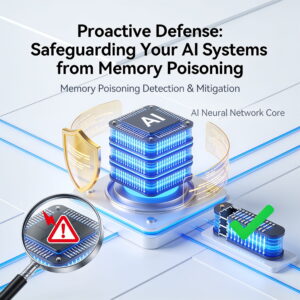
Addressing threats like the Ruflo MCP Flaw requires a multi-layered, proactive approach to AI security. Businesses must move beyond traditional IT security models to adopt strategies specifically tailored to the unique challenges of AI and machine learning.
- Prioritize Patching and Software Updates: This is foundational. Timely application of security patches and software updates for all components of your AI infrastructure (operating systems, frameworks, libraries, and AI applications themselves) is crucial. Vulnerabilities like CVE-2026-59726 often have patches released to address them. Staying updated closes known exploit avenues.
- Implement Robust Authentication and Authorization: Never expose AI control interfaces or data streams without stringent authentication. Employ multi-factor authentication (MFA) for all administrative access. Beyond authentication, implement granular authorization controls to ensure that only authorized users or services have the minimum necessary permissions (least privilege) to interact with specific AI models or data.
- Strict Input Validation and Sanitization: This is a key defense against data poisoning. All data fed into an AI system – whether for training, fine-tuning, or real-time inference – must be rigorously validated and sanitized to remove any malicious code, unexpected formats, or adversarial inputs that could corrupt the AI’s memory or trigger unintended behaviors.
- Regular Security Audits and Penetration Testing: Treat your AI systems like any other critical IT asset. Conduct regular security audits, vulnerability assessments, and penetration tests specifically designed to probe for weaknesses in your AI models, APIs, and infrastructure. This includes testing for adversarial attacks that aim to poison or manipulate AI outputs.
- Continuous Monitoring and Anomaly Detection: Implement robust monitoring solutions that can detect unusual activity within your AI systems. This includes tracking data inputs, model outputs, API calls, and system resource usage. Anomaly detection algorithms can flag behaviors indicative of an attack, such as sudden changes in AI performance, unusual data access patterns, or unexpected command executions.
- Secure AI Development Lifecycle (SecDevOps for AI): Integrate security considerations throughout the entire AI development lifecycle, from data collection and model training to deployment and maintenance. This includes secure coding practices, peer reviews, and automated security testing at every stage.
- Data Governance and Provenance: Maintain clear records of your AI’s training data, its sources, and any transformations applied. Establishing data provenance helps in identifying and mitigating the impact if training data is found to be compromised. Implement robust data governance policies for all data used by your AI.
- Employee Training and Awareness: The human element remains a critical link in the security chain. Educate your teams on the specific security risks associated with AI, best practices for interacting with AI systems, and how to recognize and report suspicious activities.
AI Automation and Consulting: AITechScope’s Role in Fortifying Your Future
At AITechScope, we understand that businesses need to leverage the power of AI to achieve efficiency, scale, and drive digital transformation, but they also need to do so securely. Our expertise lies precisely at this intersection, providing the strategies, tools, and support to build resilient, high-performing AI-powered operations. We believe that robust security is not a barrier to innovation but its foundation.
How AITechScope Fortifies Your AI Future:
- Proactive AI Strategy & Security Consulting: We don’t just help you adopt AI; we help you adopt it wisely. Our AI consultants work with you to assess your existing AI landscape, identify potential vulnerabilities like the Ruflo flaw, and develop a comprehensive AI security strategy. This includes guiding you on secure model deployment, data governance, and implementing best practices to prevent AI memory poisoning and other attacks. We help you balance aggressive innovation with stringent security.
- Secure n8n Workflow Development & Automation: Many businesses use automation platforms like n8n to integrate AI services into their workflows. AITechScope specializes in developing secure n8n workflows that act as a protective layer for your AI interactions. We ensure:
- Validated and Sanitized Inputs: All data flowing into your AI models through n8n workflows is rigorously checked and cleaned to prevent malicious injection.
- Secure API Integrations: We configure secure connections to your AI services, utilizing robust authentication (API keys, OAuth) and encrypting data in transit.
- Access Control within Workflows: We design workflows with precise permissions, ensuring only authorized components can trigger or interact with sensitive AI functions.
- Anomaly Detection in Automation: We can integrate monitoring into n8n workflows to flag unusual AI outputs or unexpected workflow behaviors, providing early warnings of potential compromise.
- Intelligent Virtual Assistant Services with Built-in Security: Our virtual assistant solutions are designed with security at their core. We implement advanced measures to protect conversational data, ensure the integrity of the AI’s “memory,” and prevent unauthorized access or manipulation. By leveraging our secure virtual assistants, businesses can automate customer service, internal support, and various administrative tasks with confidence, knowing their sensitive interactions are protected. We empower your business to scale operations and reduce costs through intelligent delegation, without compromising security.
- Enabling Digital Transformation Through Secure AI: True digital transformation isn’t just about adopting new technologies; it’s about integrating them seamlessly and securely into your business fabric. AITechScope helps you achieve this by:
- Identifying High-Value, Low-Risk AI Applications: We help you pinpoint areas where AI can deliver maximum impact while minimizing security exposure.
- Building Resilient AI Infrastructure: We advise on architectural choices and cloud configurations that enhance the security and fault tolerance of your AI systems.
- Optimizing Workflows with Security in Mind: Every automation we build, every AI integration we facilitate, is designed to enhance efficiency while meticulously adhering to the highest security standards.
- Website Development for Secure AI Integration: For businesses looking to integrate AI features directly into their websites, we ensure that these integrations are performed with a deep understanding of web security best practices, protecting both your AI and your users from potential vulnerabilities.
The Ruflo MCP Flaw is a stark reminder that while AI offers immense opportunities for efficiency and growth, it also introduces new attack vectors that require specialized attention. Ignoring these threats is no longer an option for businesses aiming for sustainable digital transformation and workflow optimization.
Practical Takeaways for Your Business Leaders
- AI Security is Business Security: Recognize that the security of your AI systems is as critical as your financial systems or customer databases. A breach or compromise here can have devastating consequences across your entire organization.
- Invest Proactively in AI Security Measures: Don’t wait for a security incident. Allocate resources for AI-specific security audits, robust authentication, and continuous monitoring. Prevention is always less costly than recovery.
- Seek Expert Guidance: AI security is a specialized field. Partner with experts who understand the nuances of machine learning vulnerabilities, adversarial attacks, and secure AI deployment.
- Foster a Culture of AI Security Awareness: Educate your teams on the importance of AI security, secure data handling, and responsible AI usage.
- Prioritize Transparency and Resilience: Understand your AI models, their data sources, and their potential biases. Build systems that can detect and recover from attacks, ensuring business continuity even in the face of compromise.
In the rapidly evolving landscape of artificial intelligence, staying informed and proactive is paramount. The potential for AI memory poisoning and other sophisticated attacks is real, but with the right strategies and expert partners, your business can confidently harness the power of AI to innovate, optimize, and lead.
Don’t let emerging AI threats undermine your journey towards digital excellence. Secure your AI future today.
Ready to safeguard your AI investments and optimize your business with intelligent automation?
At AITechScope, we empower businesses to leverage cutting-edge AI technologies securely and efficiently. Whether you need expert AI consulting, robust n8n workflow development, or intelligent virtual assistant services, we have the solutions to drive your digital transformation.
Explore AITechScope’s AI Automation and Consulting Services Today!
FAQ: Frequently Asked Questions
What is AI memory poisoning?
AI memory poisoning is a critical cybersecurity threat where malicious information or data is intentionally fed into an AI system. This manipulation can alter the AI’s core understanding, its learned parameters, conversational context, or operational logic, causing it to generate biased, incorrect, or harmful outputs, or even execute unauthorized commands, without appearing overtly compromised.
How does the Ruflo MCP Flaw relate to AI memory poisoning?
The Ruflo MCP Flaw (CVE-2026-59726) is a critical vulnerability that exposes an unauthenticated Machine Control Protocol (MCP) bridge. This flaw provides a dangerous pathway for attackers to gain unauthorized access to AI systems, enabling them to perform Remote Code Execution (RCE), steal Large Language Model (LLM) keys, access conversations, and directly execute AI memory poisoning by corrupting the AI’s “brain” through manipulating its parameters or operational data.
What are the business risks associated with AI memory poisoning?
The risks are extensive and severe, including compromised data security and privacy (leading to breaches and regulatory fines), significant reputational damage and loss of customer trust, operational disruptions and substantial financial losses, regulatory non-compliance, erosion of competitive advantage, and unreliable decision-making that can derail business strategies and digital transformation efforts.
What steps can businesses take to prevent AI memory poisoning?
Prevention requires a multi-layered approach: prioritizing timely patching and software updates, implementing robust authentication and granular authorization, strict input validation and sanitization for all data, conducting regular AI-specific security audits and penetration testing, continuous monitoring for anomalies, integrating security throughout the AI development lifecycle (SecDevOps), ensuring strong data governance, and comprehensive employee training on AI security awareness.
How can AITechScope help businesses secure their AI systems?
AITechScope provides expert AI strategy and security consulting to identify vulnerabilities and develop robust security strategies. They specialize in secure n8n workflow development and automation, ensuring validated inputs, secure API integrations, and access controls. Their intelligent virtual assistant services are built with security at the core, protecting conversational data and AI integrity. AITechScope helps businesses achieve digital transformation by building resilient AI infrastructure and optimizing workflows with security in mind.