

The Imperative of AI Security and Business Resilience: Navigating the New Era of Digital Threats
Estimated reading time: 8 minutes
- AI security and business resilience are critical for safe scaling in a hyper-connected world.
- Zero-day exploits like “RoguePlanet” highlight how security tools can become attack vectors if not managed holistically.
- AI offers powerful defense mechanisms, including advanced threat detection and automated incident response.
- A “Security-by-Design” approach, Zero-Trust architecture, and hardened automated workflows are essential for digital transformation.
- Continuous monitoring, auditing, and proactive identification of “shadow AI” are vital for maintaining security.
Table of Contents
Understanding the Threat
The Convergence of AI Automation and Cybersecurity
Strengthening Your Digital Transformation: A Strategic Framework
Practical Takeaways for Business Professionals
How AI TechScope Elevates Your Security and Efficiency
Conclusion: Embracing the Future with Confidence
Frequently Asked Questions
Understanding the Threat: The RoguePlanet Zero-Day and the Reality of SYSTEM Access
In the rapidly evolving landscape of digital transformation, the intersection of automation and vulnerability has become the new frontline for enterprise risk management. As we integrate increasingly sophisticated tools into our daily operations, maintaining AI security and business resilience is no longer just a task for the IT department—it is a fundamental requirement for any business leader aiming to scale safely in a hyper-connected world.
Recent developments in the cybersecurity landscape have served as a sobering reminder that even the most robust defense mechanisms are not infallible. A recent report from The Hacker News highlighted a critical vulnerability known as the “RoguePlanet” exploit, which targets a zero-day race condition within Microsoft Defender. This isn’t just a minor bug; it is a flaw capable of granting an attacker SYSTEM-level access on updated Windows environments. For the modern entrepreneur or tech-forward executive, this news is a signal: the tools we rely on to protect our digital assets can themselves become the gateway for sophisticated breaches if not managed within a broader, more resilient framework.
In this deep dive, we will explore the technical implications of such exploits, the strategic necessity of building security into your AI-driven workflows, and how businesses can leverage automation to not only drive efficiency but also bolster their defensive posture.
The RoguePlanet Zero-Day and the Reality of SYSTEM Access
To appreciate the gravity of the Microsoft Defender exploit, we must first demystify some of the technical terminology. In the world of cybersecurity, a “zero-day” refers to a vulnerability that is unknown to the software vendor (in this case, Microsoft) and for which no patch yet exists. The “RoguePlanet” PoC (Proof of Concept) exploit specifically targets a “race condition.”
Imagine two people trying to walk through a narrow door at the exact same millisecond. In a computing context, a race condition occurs when a system attempts to perform two or more operations simultaneously, and the final outcome depends on the precise timing of those operations. An attacker can exploit this “timing gap” to trick the operating system. In the case of the Rogue Planet exploit, the attacker manipulates this race condition within Microsoft Defender—the very software meant to protect the system—to bypass security protocols.
The most alarming aspect of this exploit is its ability to produce a “SYSTEM-level shell.” In the Windows hierarchy, “SYSTEM” is the highest level of privilege, sitting even above the standard Administrator account. If an attacker gains SYSTEM access, they essentially own the machine. They can install malware, steal sensitive data, intercept communications, and move laterally through a company’s entire network.
For business leaders, the takeaway is clear: even when you are “up to date” and using industry-standard security software, the landscape of risk is dynamic. Security is not a destination you reach by installing a specific piece of software; it is a continuous process of adaptation and resilience.
The Convergence of AI Automation and Cybersecurity
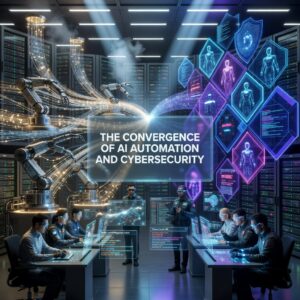
As businesses move toward “Intelligent Delegation”—using AI agents and automated workflows to handle everything from customer service to complex data analysis—the attack surface of the modern enterprise expands. This is where the concept of AI security and business resilience becomes critical.
When you implement automation via platforms like n8n, you are essentially creating digital nervous systems that connect various APIs, databases, and third-party applications. An automated workflow might pull data from a CRM, process it through an LLM (Large Language Model), and then update an ERP system. While this creates immense efficiency, it also creates new pathways. If one link in that automated chain is compromised—perhaps through a credential leak or an unpatched vulnerability in the underlying OS—the entire workflow can be weaponized.
The Dual Nature of AI in Security
We are currently witnessing a “technological arms race.” On one hand, attackers are using AI to craft more convincing phishing campaigns and to automate the discovery of zero-day vulnerabilities like RoguePlanet. On the other hand, AI provides the most potent tool we have for defense.
- AI-Powered Threat Detection: Traditional antivirus software relies heavily on “signatures”—known patterns of malicious code. However, zero-day exploits, by definition, have no signature. AI-driven security tools use anomaly detection to identify behavior that “looks wrong.” If a user account suddenly starts accessing thousands of files at 3:00 AM, an AI agent can flag and isolate that account instantly.
- Automated Incident Response: This is where the synergy between AI and automation (the specialty of AI TechScope) becomes a competitive advantage. Instead of waiting for a human analyst to see an alert, a well-constructed n8n workflow can be programmed to trigger an immediate response: revoking API keys, isolating a compromised server, or notifying the security team with a pre-compiled impact report.
Strengthening Your Digital Transformation: A Strategic Framework
Digital transformation is often discussed in terms of growth and revenue, but its true foundation is stability. To leverage AI without falling victim to its inherent risks, business leaders should adopt a “Security-by-Design” mindset.
1. Implement Zero-Trust Architecture
The era of the “secure perimeter” is over. In a world of cloud computing and remote work, you cannot assume that anything inside your network is safe. A Zero-Trust model operates on the principle of “never trust, always verify.” Every time an automated workflow or an AI agent attempts to access a resource, it must be authenticated and authorized. This prevents an attacker who has gained SYSTEM access via a vulnerability like RoguePlanet from moving freely across your entire digital estate.
2. Hardening Automated Workflows
When building automations, security should not be an afterthought.
- Principle of Least Privilege (PoLP): Ensure that your n8n workflows and AI agents are only given the minimum level of access required to perform their tasks. An AI agent tasked with summarizing emails does not need access to your financial database.
- Secret Management: Never hard-code API keys or passwords into your automation scripts. Use dedicated secret management tools to ensure that even if a script is exposed, your credentials remain secure.
3. Continuous Monitoring and Auditing
Resilience is built through visibility. You cannot protect what you cannot see. Use AI-driven logging and monitoring tools to maintain a real-time view of your automated processes and system health. Regular audits of your AI implementations are essential to ensure that “drift”—where an AI model’s behavior changes over time—does not lead to unintended security gaps.
Practical Takeaways for Business Professionals
How can you apply these insights to your organization today? Here is a checklist for tech-forward leaders:
- Audit Your “Shadow AI”: Identify where employees might be using unvetted AI tools (like public LLMs) to process company data. These “shadow” applications are significant security blind spots.
- Review Patch Management Protocols: While zero-days are hard to defend against, many breaches occur because known vulnerabilities were left unpatched. Ensure your IT team has a rigorous, automated patching schedule.
- Evaluate Your Workflow Security: Look at your most critical business processes. Are they manual and prone to human error, or are they automated? If they are automated, have you mapped out the security dependencies of each step?
- Invest in Resilient Infrastructure: Moving toward cloud-native, modular architectures allows you to “fail gracefully.” If one component is compromised, a resilient system allows you to isolate that component without a total business shutdown.
How AI TechScope Elevates Your Security and Efficiency
At AI TechScope, we understand that the goal of digital transformation is not just to work faster, but to work smarter and more securely. We specialize in bridging the gap between cutting-edge AI capabilities and robust, enterprise-grade reliability.
Our expertise allows us to help you navigate the complexities of the modern digital landscape in several key ways:
Intelligent n8n Workflow Development
We don’t just build automations; we build *secure* automations. Our n8n developers specialize in creating complex, multi-step workflows that integrate seamlessly with your existing stack while adhering to the principles of least privilege and secure secret management. We ensure that your “digital nervous system” is an asset, not a liability.
AI Consulting and Strategy
The transition to an AI-driven business can be overwhelming. Our consulting services provide the roadmap you need. We help you identify high-impact automation opportunities, evaluate the security implications of new AI tools, and design a strategy that prioritizes both efficiency and AI security and business resilience. We help you move from reactive firefighting to proactive, intelligent growth.
Secure Digital Presence and Website Development
Your website is often the first point of contact for your customers and the first line of defense against external threats. Our web development team focuses on creating high-performance, secure, and scalable websites that serve as a stable foundation for your digital operations.
Business Process Optimization
True efficiency comes from the removal of friction. We analyze your existing workflows to identify bottlenecks and replace manual, error-prone tasks with intelligent, automated solutions. By optimizing your processes through AI, we reduce the “human error” component of your security risk profile.
Conclusion: Embracing the Future with Confidence
The news of the RoguePlanet zero-day is a reminder of the inherent risks in our digital world, but it should not be a cause for paralysis. Instead, it should be a catalyst for more thoughtful, strategic implementation of technology.
The businesses that will thrive in the coming decade are those that view security and automation as two sides of the same coin. By building resilience into your digital DNA—through Zero-Trust principles, secure automation, and expert-led AI integration—you can harness the incredible power of artificial intelligence to scale your operations, reduce costs, and lead your industry with confidence.
Don’t leave your digital future to chance.
Ready to transform your business with secure, intelligent automation? [Contact AI TechScope today] to explore our AI automation and consulting services. Let us help you build a resilient, efficient, and future-proof organization.
Disclaimer: The information provided in this newsletter is for educational and informational purposes only and does not constitute professional cybersecurity or legal advice. Always consult with a qualified security professional regarding your specific business needs.
Frequently Asked Questions
What is a “zero-day” vulnerability?
A “zero-day” vulnerability is a security flaw in software that is unknown to the vendor and for which no patch or fix has yet been released. Attackers can exploit these vulnerabilities before developers have a chance to address them.
How can AI improve cybersecurity?
AI can significantly improve cybersecurity through advanced threat detection (identifying anomalies and behaviors rather than just known signatures) and automated incident response, allowing for faster and more efficient mitigation of security breaches.
What is Zero-Trust Architecture?
Zero-Trust Architecture is a security model that operates on the principle of “never trust, always verify.” It requires strict identity verification and authorization for every user and device attempting to access resources, regardless of their location within or outside the network perimeter.
Why is “shadow AI” a security risk?
“Shadow AI” refers to AI tools used by employees without official approval or oversight. These tools can pose security risks because their security posture is unknown, and they may process sensitive company data in ways that are not compliant with organizational security policies, creating blind spots.
How can businesses ensure the security of their automated workflows?
Businesses can ensure the security of automated workflows by implementing the Principle of Least Privilege (PoLP), using robust secret management tools, conducting regular security audits, and adopting a “Security-by-Design” approach where security is integrated from the initial stages of workflow development.
“`