
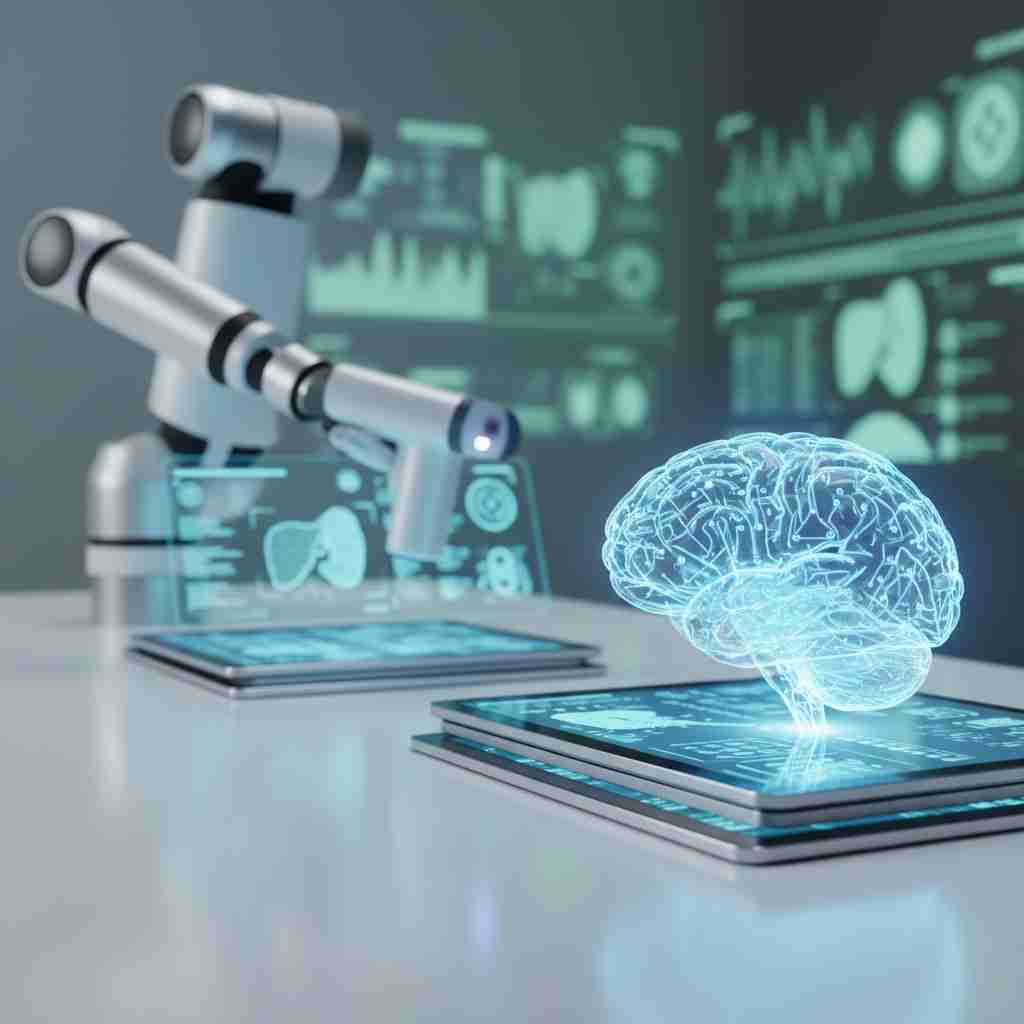
AI in Healthcare Imaging: A Glimpse into the Future of Prevention and a Blueprint for Business Innovation
Estimated reading time: Approximately 8-10 minutes
Key Takeaways
- AI is rapidly transforming healthcare imaging, enabling earlier and more accurate disease detection, especially in cardiovascular prevention.
- The principles of AI adoption in medical imaging – enhanced diagnostics, data-driven insights, and streamlined workflows – offer universal lessons for any business seeking digital transformation and competitive advantage.
- Businesses can leverage AI for data-driven decision-making, automating repetitive tasks for efficiency, and utilizing predictive analytics for proactive strategy formulation.
- Successful AI integration requires a focus on data quality, clear strategic vision, seamless integration with existing systems, and a culture of continuous innovation.
- Partnerships with expert providers like AITechScope can help demystify AI, build custom automation workflows, and develop intelligent web presences to revolutionize business operations.
Table of Contents
- The Heart of Innovation: AI in Healthcare Imaging
- Beyond the Clinic: Lessons from AI in Healthcare for Every Business
- Practical Takeaways for Forward-Thinking Businesses
- AITechScope: Your Partner in AI Automation and Digital Transformation
- Ready to Transform Your Business with AI?
- FAQ
In an era defined by rapid technological advancement, artificial intelligence (AI) is no longer a futuristic concept but a present-day reality, reshaping industries from finance to logistics, and profoundly impacting the healthcare sector. The recent announcement of the American Society for Preventive Cardiology (ASPC)’s 2026 Virtual Imaging Symposium, scheduled for April 25, 2026, serves as a powerful reminder of this transformative shift. This half-day educational program, dedicated to advancing the role of cardiovascular imaging in disease prevention, is a testament to how cutting-edge tools and their clinical applications are revolutionizing medicine. More specifically, it underscores the profound and rapidly expanding influence of AI in Healthcare Imaging.
For business leaders, entrepreneurs, and tech-forward professionals, this development isn’t just about medical advancements; it’s a clear signal of the broader digital transformation sweeping across all sectors. The principles driving innovation in medical imaging – enhanced diagnostics, data-driven insights, and streamlined workflows – are universally applicable and offer invaluable lessons for any organization striving for efficiency, scalability, and competitive advantage. Understanding how AI is being leveraged in such a critical field can provide a blueprint for optimizing your own business operations, from customer service to internal processes, through intelligent automation and strategic AI integration.
The Heart of Innovation: AI in Healthcare Imaging
The upcoming Virtual Cardiac Imaging Symposium by the ASPC is poised to bring together leading experts to delve into the very forefront of diagnostic technology. Cardiovascular disease remains a global health challenge, and the ability to detect and prevent it early is paramount. This is where AI steps in as a game-changer.
Traditionally, interpreting medical images like X-rays, CT scans, and MRIs has been a highly skilled, time-intensive task performed by radiologists and cardiologists. While human expertise remains irreplaceable, AI is augmenting these capabilities in unprecedented ways. Algorithms powered by machine learning and deep learning can analyze vast quantities of imaging data with remarkable speed and accuracy, often identifying subtle patterns that might be imperceptible to the human eye.
Consider the intricate details within a cardiac image. AI models can be trained on millions of such images, learning to identify anomalies indicative of early-stage heart disease, plaque buildup, or structural abnormalities. This capability drastically reduces the time required for diagnosis, improves diagnostic consistency, and, critically, enables earlier intervention. For instance, AI can segment cardiac structures, quantify blood flow, and even predict future cardiovascular events based on current imaging data and patient history. This move towards predictive and preventive cardiology, heavily reliant on AI, represents a paradigm shift from reactive treatment to proactive health management.
The “cutting-edge imaging tools” to be discussed at the symposium likely include advanced AI-powered diagnostic software that integrates with existing imaging modalities. These tools don’t just process images; they interpret them, cross-reference them with patient data, and provide actionable insights to clinicians. This integration of AI not only enhances diagnostic precision but also streamlines the entire clinical workflow, allowing healthcare professionals to focus more on patient care and less on manual data analysis. The benefits are multifold: improved patient outcomes, reduced healthcare costs through early detection, and optimized resource allocation within medical facilities.
The virtual nature of the symposium itself speaks volumes about digital transformation. In a post-pandemic world, virtual events have become a standard, enabling broader participation and knowledge dissemination without geographical barriers. This embrace of digital platforms for education and collaboration mirrors the broader trend of businesses leveraging technology to connect, learn, and operate more efficiently.
Beyond the Clinic: Lessons from AI in Healthcare for Every Business
While the intricacies of cardiovascular imaging might seem far removed from the daily operations of a manufacturing plant, a marketing agency, or a retail business, the underlying principles of AI application are universally relevant. The advancements in AI in Healthcare Imaging offer profound insights into how any organization can harness AI for digital transformation, operational efficiency, and sustainable growth.
1. The Power of Data-Driven Decision Making:
- Healthcare Parallel: AI’s effectiveness in cardiac imaging stems from its ability to process and learn from massive datasets of medical images and patient information. The more data an AI model is fed, the smarter and more accurate its diagnostic capabilities become.
- Business Application: For your business, this translates into recognizing that your operational data – customer interactions, sales figures, inventory levels, website analytics, employee performance metrics – is an invaluable asset. AI can sift through this data to uncover trends, predict market shifts, personalize customer experiences, and identify bottlenecks in your processes. Investing in data collection, hygiene, and analysis tools is foundational for any AI initiative.
2. Automation for Precision and Efficiency:
- Healthcare Parallel: AI automates the tedious, repetitive, yet critical task of image analysis, allowing medical professionals to focus on complex cases and patient interaction. This automation reduces human error and significantly speeds up diagnosis.
- Business Application: Identify areas within your business rife with repetitive, rule-based tasks. This could be anything from processing invoices, onboarding new employees, managing customer support queries, to generating routine reports. AI-powered automation can handle these tasks with greater speed and accuracy, freeing up your human talent for more strategic, creative, and customer-facing roles. This not only boosts efficiency but also enhances consistency and reduces operational costs.
3. Predictive Power for Proactive Strategy:
- Healthcare Parallel: AI in preventive cardiology aims to predict disease risk before symptoms manifest, enabling proactive interventions.
- Business Application: The same predictive analytics can be applied to business challenges. Imagine AI predicting customer churn, forecasting demand fluctuations for your products, identifying potential supply chain disruptions, or even anticipating equipment failures in a manufacturing setting. This foresight allows businesses to move from reactive problem-solving to proactive strategy formulation, mitigating risks and seizing opportunities before competitors.
4. The Imperative of Digital Transformation:
- Healthcare Parallel: The very existence of a “Virtual Cardiac Imaging Symposium” underscores the necessity of digital platforms for collaboration, education, and service delivery. The tools discussed are inherently digital, requiring robust infrastructure and seamless integration.
- Business Application: Digital transformation isn’t just about adopting new software; it’s about fundamentally rethinking how your business operates in a digital-first world. This includes migrating to cloud-based systems, ensuring seamless data flow between different applications, enhancing digital customer touchpoints, and equipping your team with the tools and skills to navigate a technologically advanced landscape. Businesses that fail to adapt risk being left behind in a rapidly evolving market.
Practical Takeaways for Forward-Thinking Businesses
The lessons from the advancements in AI in Healthcare Imaging are directly actionable for businesses aiming to optimize their operations and carve out a competitive edge.
1. Embrace Data as Your Core Asset, and Treat It With Care:
Just as medical images are meticulously collected and analyzed, your business data needs the same attention. Invest in robust data management systems, ensure data quality, and establish clear strategies for collecting, storing, and utilizing information. Poor data quality will lead to poor AI outcomes.
2. Identify High-Impact Automation Opportunities:
Don’t automate for automation’s sake. Look for tasks that are:
- Repetitive: Performed frequently with consistent steps.
- Time-Consuming: Tasks that consume significant human hours.
- Prone to Human Error: Where mistakes can lead to significant costs or compliance issues.
- Data-Intensive: Tasks that involve processing large amounts of information.
Starting with these areas offers the quickest ROI and builds internal confidence in AI.
3. Cultivate AI Literacy and Strategic Vision:
You don’t need to be an AI developer, but business leaders must understand AI’s capabilities, limitations, and ethical implications. Develop a clear AI strategy that aligns with your overall business objectives. What problems are you trying to solve? What opportunities are you aiming to capture?
4. Prioritize Seamless Integration and Scalability:
Modern businesses rely on a diverse stack of applications. Any new AI or automation solution must integrate smoothly with your existing CRM, ERP, marketing platforms, and communication tools. Look for solutions that are flexible and can scale with your business growth, rather than creating new data silos or operational friction.
5. Foster a Culture of Continuous Improvement and Innovation:
The rapid pace of change in AI means that what’s cutting-edge today might be standard tomorrow. Encourage your team to experiment with new technologies, learn new skills, and constantly seek ways to improve processes. A culture that embraces innovation is vital for long-term success in the AI era.
AITechScope: Your Partner in AI Automation and Digital Transformation
While the focus of the ASPC symposium is on specialized medical applications, the underlying principles of leveraging AI for advanced diagnostics, predictive analysis, and operational efficiency are precisely what AITechScope brings to businesses across all sectors. We understand that just as cardiologists seek cutting-edge tools for preventive care, business leaders need sophisticated solutions to prevent operational bottlenecks, predict market shifts, and optimize their workflows.
AITechScope is a leading provider of virtual assistant services, specializing in helping businesses leverage AI-powered automation, n8n workflow development, and business process optimization. We translate the complex advancements you see in fields like AI in Healthcare Imaging into practical, implementable solutions for your unique business challenges.
Strategic AI Consulting:
- Our experts work with you to demystify AI, identify high-impact opportunities within your organization, and develop a clear, actionable AI strategy. Whether it’s enhancing customer service, optimizing sales processes, or automating back-office functions, we guide you from concept to implementation. We help you understand how intelligent delegation and AI tools can scale your operations without proportionally scaling costs.
n8n Workflow Development:
- Just as healthcare systems need seamless data flow between imaging machines, patient records, and diagnostic software, your business needs its various applications to communicate effortlessly. Our n8n specialists build robust, custom automation workflows that connect disparate systems, automate complex, multi-step processes, and ensure data integrity across your entire digital ecosystem. From automated lead nurturing to intelligent report generation, n8n integration can eliminate manual data entry, reduce errors, and free up valuable employee time.
Virtual Assistant Services:
- Beyond specific automations, our AI-powered virtual assistants act as an extension of your team, intelligently handling routine tasks, managing schedules, filtering communications, and providing immediate support. This intelligent delegation allows your human workforce to focus on high-value, strategic initiatives, significantly improving overall efficiency and employee satisfaction.
Website Development for the AI Era:
- Your website is often the first point of contact with your customers and a critical engine for data collection. AITechScope develops modern, secure, and highly functional websites designed to integrate seamlessly with AI tools and automation workflows. We build platforms that not only look great but also serve as intelligent data hubs, enhance user experience through AI-driven personalization, and support your broader digital transformation goals.
The future is intelligent, automated, and data-driven. The innovations in AI in Healthcare Imaging are just one example of how rapidly AI is transforming critical sectors. Businesses that recognize these trends and proactively integrate AI into their strategies will be the ones that thrive.
Ready to Transform Your Business with AI?
Don’t let the complexity of AI deter you. Just as medical professionals are embracing AI for better patient outcomes, your business can leverage AI for unparalleled efficiency, growth, and competitive advantage.
AITechScope is here to be your trusted partner on this journey. Whether you’re looking to automate repetitive tasks, integrate your business systems, develop an AI strategy, or build an intelligent web presence, we have the expertise to help you navigate the AI landscape successfully.
Contact AITechScope today for a consultation and discover how AI automation and intelligent delegation can revolutionize your business operations.
FAQ
What is the main impact of AI in healthcare imaging?
AI in healthcare imaging significantly enhances diagnostic speed and accuracy by analyzing vast quantities of medical images, identifying subtle patterns, and enabling earlier detection and intervention for diseases like cardiovascular conditions. This shifts focus from reactive treatment to proactive health management.
How can businesses outside of healthcare apply lessons from AI in medical imaging?
Businesses can apply these lessons by leveraging AI for data-driven decision making (analyzing operational data), automating repetitive tasks for increased efficiency, using predictive analytics for proactive strategy, and embracing comprehensive digital transformation in their operations and customer interactions.
What are the key benefits of AI-powered automation for businesses?
AI-powered automation can handle repetitive, time-consuming tasks with greater speed and accuracy, reducing human error and operational costs. It frees up human talent for more strategic and creative roles, boosts overall efficiency, and ensures consistency in processes.
Why is data quality important for AI initiatives?
Just as AI models learn from medical images, their effectiveness in business applications depends entirely on the quality of the data they are fed. Poor data quality leads to inaccurate insights and unreliable AI outcomes, making robust data management and hygiene foundational.
How can AITechScope help businesses with AI integration?
AITechScope provides strategic AI consulting, n8n workflow development for system integration and automation, AI-powered virtual assistant services for intelligent delegation, and website development designed for AI integration and data collection, translating complex AI advancements into practical business solutions.