

Navigating the Murky Waters of AI Data Scraping Ethics: Insights from the Suno Controversy
Estimated reading time: 10 minutes
Key Takeaways
- AI data scraping raises significant ethical and legal concerns, particularly regarding copyright infringement and fair use, which every business must address.
- The recent Suno hacking incident exposed alleged unauthorized scraping of copyrighted music, serving as a stark warning about the potential legal and reputational risks for all businesses leveraging AI.
- To mitigate liabilities, businesses must demand transparency from AI vendors, conduct thorough due diligence on internal AI development, and possess a clear understanding of their entire data ecosystem.
- Embracing ethical AI practices is rapidly becoming a crucial competitive advantage, fostering greater trust with customers and partners while ensuring compliance in an evolving regulatory landscape.
- Proactive engagement with responsible AI, often through specialized consulting and automation partners like AITechScope, is essential for future-proofing business strategies and ensuring AI is deployed both powerfully and ethically.
Table of Contents
- Understanding the Core of AI Data Scraping Ethics: The Suno Revelation
- The Broader Implications for Business in the AI Landscape
- Practical Takeaways for Businesses: Navigating the Ethical AI Minefield
- Leveraging Responsible AI for Business Efficiency with AITechScope
- Ready to Build a Future-Proof, Ethical AI Strategy?
- FAQ Section
The rapid evolution of artificial intelligence continues to reshape industries, offering unprecedented opportunities for innovation, efficiency, and growth. Yet, beneath the surface of this technological marvel lies a complex ethical and legal landscape that demands careful consideration. One of the most critical, and often contentious, issues at the forefront of this discussion revolves around AI data scraping ethics. How AI models acquire their foundational knowledge—the vast datasets they are trained on—is not merely a technical detail; it’s a business imperative with profound implications for compliance, reputation, and competitive advantage.
Recently, the AI world was granted a rare, albeit involuntary, glimpse into the opaque training practices of a prominent AI music generator, Suno. A hacking incident revealed that Suno had allegedly scraped millions of songs and lyrics from widely used online audio platforms, including YouTube Music, Deezer, and Genius. This revelation didn’t just expose a potential breach of ethical conduct; it thrust the question of copyright infringement and fair use in the age of generative AI directly into the spotlight, igniting debates that every business leader leveraging or considering AI must pay close attention to.
For businesses navigating digital transformation, understanding the nuances of how AI models are built, and the ethical lines that govern their training data, is paramount. The Suno case serves as a stark reminder that the “black box” nature of some AI development can hide significant risks, transforming what appears to be a technological leap into a legal and reputational quagmire. As leaders, entrepreneurs, and tech-forward professionals, our responsibility is not just to embrace AI’s potential but to ensure its development and deployment are grounded in principles of transparency, legality, and ethical integrity.
Understanding the Core of AI Data Scraping Ethics: The Suno Revelation
The recent reports surrounding Suno, an AI music generator, offer a compelling case study on the critical questions facing the AI industry today. For years, Suno, like many other AI developers, has remained notably tight-lipped about the composition and acquisition methods of its training datasets. This lack of transparency, while perhaps intended to protect proprietary methods, has also fueled speculation and, ultimately, legal challenges.
The hacking incident, as reported by 404 Media, provided an uncomfortable window into Suno’s practices. The exposed data pointed directly to the systematic scraping of millions of copyrighted songs and lyrics from popular platforms such as YouTube Music, Deezer, and Genius. These platforms are repositories of intellectual property, where creators share their work with the expectation of protection and fair compensation. The alleged bulk acquisition of this content for commercial AI training purposes, without explicit permission or licensing, immediately raises red flags concerning intellectual property rights.
This isn’t an isolated incident for Suno; the company is already embroiled in several lawsuits alleging the use of copyrighted materials to train its AI models. The Recording Industry Association of America (RIAA) has filed a notable case, to which Suno has openly admitted to certain aspects, though the specifics of its defense remain under wraps. The core of these legal battles centers on the interpretation of “fair use” versus outright “stealing” in the context of AI training data.
What Does This Mean for Fair Use?
The concept of “fair use” is a cornerstone of copyright law, allowing limited use of copyrighted material without permission for purposes such as criticism, comment, news reporting, teaching, scholarship, or research. However, applying fair use to AI training, particularly when the AI model’s output directly competes with or replaces the original copyrighted work, is a highly contested area.
Critics argue that when an AI model ingests vast quantities of copyrighted material to generate new content that can be monetized, it goes beyond the spirit of fair use. They contend that this constitutes unauthorized reproduction and derivative work creation, undermining the economic rights of creators. Proponents of AI scraping, however, often argue that the act of training an AI model, by transforming existing data into a new generative capability, is transformative in nature, akin to a human learning from existing art to create their own. They might also argue that the output is often sufficiently different from the original, or that the training process itself is not a public performance or reproduction.
The Suno case, and others like it, are pivotal because they are setting precedents for how intellectual property law will be interpreted in the AI era. The outcomes of these lawsuits will not only impact AI music generators but will send ripple effects across all sectors leveraging generative AI, from text and images to code and video.
The Broader Implications for Business in the AI Landscape
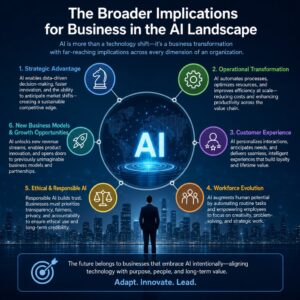
The Suno controversy is more than just a legal skirmish in the music industry; it’s a lighthouse illuminating potential hazards for any business investing in or deploying AI. The challenges posed by AI data scraping ethics extend far beyond copyright into areas of data privacy, algorithmic bias, and ultimately, a company’s trustworthiness and long-term viability.
1. Legal and Financial Liabilities:
Businesses that utilize AI models trained on illegally or unethically acquired data face significant legal and financial risks. These can include:
- Copyright Infringement Lawsuits: As seen with Suno, creators and rights holders are increasingly willing to sue AI developers and users for unauthorized use of their intellectual property. Penalties can be severe, involving substantial damages, injunctions, and legal fees.
- Data Privacy Violations: If AI models are trained on personal data scraped without consent, businesses could face class-action lawsuits, hefty fines under regulations like GDPR or CCPA, and severe reputational damage.
- Contractual Breaches: Many online platforms have terms of service that explicitly prohibit automated scraping of their content. Violating these terms can lead to legal action, account termination, and blacklisting.
2. Reputational Damage and Loss of Trust:
In an increasingly conscious consumer and business environment, a company’s ethical stance profoundly impacts its brand. Associations with unethical AI practices—such as disrespecting creators’ rights or misusing personal data—can erode public trust, alienate customers, and deter potential partners. Rebuilding a tarnished reputation can be a lengthy and expensive endeavor, often outweighing any perceived short-term gains from questionable data acquisition.
3. Algorithmic Bias and Quality Issues:
The integrity of AI outputs is directly tied to the quality and ethical sourcing of its training data. If data is scraped without proper curation or includes inherent biases, the AI model will inevitably perpetuate and amplify those biases, leading to unfair, inaccurate, or discriminatory outcomes. For example, an AI assistant trained on biased historical data might generate discriminatory responses, or an AI-powered recommendation system might perpetuate stereotypes. Furthermore, data scraped without proper validation can introduce noise, errors, and inconsistencies, leading to suboptimal AI performance and unreliable results.
4. Regulatory Scrutiny and Evolving Compliance:
Governments worldwide are recognizing the need for stricter regulations surrounding AI development and data usage. New laws are emerging that specifically address AI transparency, data provenance, and intellectual property. Businesses that fail to proactively adapt to these evolving compliance landscapes risk being caught off guard, facing penalties, and being forced to undertake costly overhauls of their AI infrastructure. Proactive engagement with ethical AI practices is not just good citizenship; it’s smart business strategy in a rapidly regulating environment.
Practical Takeaways for Businesses: Navigating the Ethical AI Minefield
For business professionals, entrepreneurs, and tech-forward leaders, the implications are clear: simply adopting AI is no longer enough. The focus must shift to adopting responsible AI. Here are practical steps your business can take to navigate the complex landscape of AI data scraping ethics and build a future-proof AI strategy:
1. Demand Transparency from AI Vendors:
When evaluating or procuring AI solutions, insist on transparency regarding their training data sources. Ask critical questions:
- Where did the training data come from?
- Were proper licenses obtained for copyrighted material?
- What measures are in place to ensure data privacy and prevent the inclusion of sensitive personal information?
- How do they address potential biases in their datasets?
A reputable AI provider will be able to answer these questions clearly and provide documentation or assurances.
2. Conduct Due Diligence on Internal AI Development:
If your organization is developing AI models in-house, establish strict internal guidelines for data acquisition.
- Prioritize ethically sourced and licensed datasets.
- Implement robust data governance frameworks.
- Ensure legal review of all data acquisition strategies.
- Invest in tools and processes for data anonymization and de-identification where personal data is involved.
3. Understand Your Data Ecosystem:
Map out all data points your business uses, from customer information to internal operational data. Categorize data by sensitivity, origin, and legal restrictions. This foundational understanding is crucial for implementing any AI solution responsibly. Knowing what data you have, where it comes from, and its limitations is the first step towards ethical AI deployment.
4. Embrace Ethical AI as a Competitive Advantage:
Position your commitment to ethical AI as a core brand value. Businesses that can demonstrate transparent, fair, and responsible AI practices will build greater trust with customers, partners, and employees. This can translate into stronger customer loyalty, easier talent acquisition, and a distinct advantage in a market increasingly sensitive to corporate ethics.
5. Stay Informed on Evolving Regulations and Best Practices:
The legal and ethical landscape for AI is dynamic. Designate internal resources or partner with experts to continuously monitor new legislation, industry standards, and best practices related to AI data usage, privacy, and intellectual property. Proactive adaptation will save your business from costly reactive measures.
Leveraging Responsible AI for Business Efficiency with AITechScope
At AITechScope, we understand that the promise of AI for business efficiency, digital transformation, and workflow optimization is immense. We also recognize the critical importance of implementing these technologies responsibly and ethically. Our expertise is specifically designed to help businesses navigate these complexities, turning challenges into opportunities for strategic growth.
We specialize in providing virtual assistant services powered by ethically developed AI, coupled with robust AI automation and consulting solutions. Our approach ensures that your journey into AI is not only transformative but also secure, compliant, and reputation-proof.
How AITechScope Can Help Your Business Succeed with Ethical AI:
- Ethical AI Consulting: Our AI consulting services guide businesses through the intricacies of responsible AI adoption. We help you develop comprehensive AI strategies that prioritize data ethics, compliance, and transparency from the ground up. This includes advising on data sourcing best practices, risk assessment, and establishing internal ethical AI guidelines. We ensure your AI initiatives align with evolving regulatory frameworks and uphold your brand’s integrity.
- N8n Automation for Secure Data Workflows: Leveraging the power of n8n, our experts design and implement custom automation workflows that not only streamline your operations but also prioritize secure and ethical data handling. We build robust systems that integrate data from legitimate, licensed sources, ensuring compliance and reducing the risk of legal exposure. From automated data collection from authorized APIs to secure data processing for AI model training, our n8n solutions are built with data governance at their core.
- AI-Powered Virtual Assistants with Integrity: Our virtual assistant services are built on a foundation of ethically sourced and robustly managed AI models. This means your AI assistants perform tasks, handle customer interactions, and optimize workflows using data that respects intellectual property and privacy rights. Experience enhanced efficiency, reduced operational costs, and superior customer service, all while maintaining the highest ethical standards.
- Optimizing Business Processes with Trusted AI: We help businesses identify opportunities for AI integration that genuinely improve efficiency without compromising ethical principles. Whether it’s automating repetitive tasks, enhancing data analysis, or personalizing customer experiences, we ensure that the AI solutions we implement contribute positively to your digital transformation journey, built on a foundation of trust and compliance.
- Website Development for AI Integration: Our website development expertise extends to creating secure, data-compliant platforms that can seamlessly integrate with AI-powered tools and services. We build the digital infrastructure necessary to support your AI initiatives, ensuring data flows are protected and interactions are optimized for both user experience and ethical standards.
The future of business is intertwined with AI, but its success hinges on responsible and ethical implementation. The Suno incident serves as a critical warning: shortcuts in data acquisition can lead to long-term liabilities. By proactively addressing AI data scraping ethics, businesses can not only mitigate risks but also forge a stronger, more trustworthy path toward innovation.
Embrace the future of AI with confidence and integrity. Don’t let the complexities of AI ethics hinder your progress. Partner with AITechScope to ensure your AI strategy is not only powerful and efficient but also built on a foundation of ethical responsibility and compliance.
Ready to Build a Future-Proof, Ethical AI Strategy?
The time to act on AI data scraping ethics is now. Don’t wait for a legal challenge or reputational damage to force your hand. Explore how AITechScope’s specialized AI automation and consulting services can empower your business to leverage cutting-edge AI tools and technologies responsibly, scale operations efficiently, and solidify your position as a leader in digital innovation.
Contact AITechScope today for a personalized consultation. Let’s discuss how we can help you build secure, compliant, and highly effective AI solutions that drive your business forward with integrity.
[Link to AI TechScope’s AI Automation and Consulting Services]
FAQ Section
What is AI data scraping?
AI data scraping is the automated process of extracting large volumes of data from websites and online platforms to use as training material for artificial intelligence models. This data can include text, images, audio, video, and more, forming the foundational knowledge base for generative AI.
Why is the Suno case important for AI ethics?
The Suno case is critical because it brought the opaque practices of AI training data acquisition into the spotlight. The alleged scraping of millions of copyrighted songs and lyrics without explicit permission raises fundamental questions about copyright infringement and fair use in the age of generative AI, setting precedents for future legal interpretations across all AI sectors.
How does “fair use” apply to AI training data?
The application of “fair use” to AI training data is highly contested. While proponents argue that transforming existing data into a new generative capability is transformative, akin to human learning, critics contend that ingesting vast copyrighted materials to create monetizable content without permission goes beyond the spirit of fair use, undermining creators’ economic rights. Courts are currently interpreting these boundaries.
What are the main risks for businesses using unethically sourced AI?
Businesses using unethically sourced AI face significant legal liabilities (copyright infringement, data privacy violations), severe reputational damage and loss of customer trust, algorithmic bias leading to inaccurate or discriminatory outputs, and increasing regulatory scrutiny. These risks can lead to substantial fines, lawsuits, and long-term harm to brand value.
How can businesses ensure ethical AI data practices?
Businesses can ensure ethical AI data practices by demanding transparency from AI vendors regarding data sources and licenses, conducting rigorous due diligence on internal AI development (prioritizing licensed and ethically sourced datasets), implementing robust data governance, understanding their entire data ecosystem, embracing ethical AI as a core competitive advantage, and staying informed on evolving regulations and best practices.
Disclaimer: This blog post provides general information and is not intended as legal advice. Businesses should consult with legal professionals regarding specific situations related to AI data scraping, copyright, and compliance.