

The Invisible Thread: Why AI Security and Automation Resilience is the New Frontier of Business Risk
Estimated reading time: 7 minutes
- The increasing complexity of automated workflows introduces new security vulnerabilities.
- A breach in integrated service platforms like ServiceNow can have cascading effects on AI and automated decision-making.
- “Data poisoning” via compromised inputs can lead AI to make disastrous business decisions.
- Adopting a Zero Trust model and ensuring data integrity are crucial for AI security and automation resilience.
- Businesses must proactively audit their “automated attack surface” and prioritize resilience over mere efficiency.
Table of Contents:
- The Invisible Thread: Why AI Security and Automation Resilience is the New Frontier of Business Risk
- The ServiceNow Incident: A Case Study in Vulnerability
- The Intersection of Enterprise Software and the AI Revolution
- Strengthening Your Digital Infrastructure through AI Security and Automation Resilience
- Practical Takeaways for Business Leaders
- How AI TechScope Empowers Secure Digital Transformation
- Conclusion: Building for the Future
The ServiceNow Incident: A Case Study in Vulnerability
In the modern digital landscape, the speed at which a business operates is often directly proportional to the complexity of its automated workflows. As enterprises integrate sophisticated tools to handle everything from customer service to supply chain management, they are inadvertently expanding their digital footprint. This expansion brings a critical necessity: AI Security and Automation Resilience. While automation promises unparalleled efficiency, it also introduces new vectors of vulnerability that, if left unaddressed, can compromise the very foundation of an organization’s data integrity and operational continuity. Recent developments in enterprise software security serve as a stark reminder that the tools we rely on to scale are often the same ones that attackers target to gain a foothold in our most sensitive systems.
A recent report from *The Hacker News* has sent ripples through the IT and cybersecurity communities. According to a report published on June 10, 2026, a significant security flaw was discovered in ServiceNow, a platform that serves as the digital backbone for many of the world’s largest enterprises. The vulnerability allowed unauthenticated users—individuals without any valid login credentials—to exploit specific circumstances to gain greater access to susceptible instances than was intended.
For the uninitiated, this is a high-stakes scenario. ServiceNow is not just a simple software application; it is an Integrated Service Management (ITSM) powerhouse. It manages workflows, tracks assets, handles IT incidents, and often serves as the central repository for organizational data. When a platform of this magnitude suffers from an “unauthenticated access” flaw, the potential for unauthorized data exfiltration, system manipulation, or lateral movement within a corporate network is immense.
While the flaw was identified and addressed, the incident highlights a fundamental truth in the era of digital transformation: your security is only as strong as your most integrated service. For businesses that have built complex ecosystems around ServiceNow—connecting it to AI agents, automated reporting tools, and customer-facing bots—a breach in the core platform doesn’t just leak data; it potentially poisons the entire automated decision-making pipeline.
The Intersection of Enterprise Software and the AI Revolution
To understand why the ServiceNow flaw is more than just a “tech news item,” we must look at how modern businesses are constructed. We are no longer in an era of “siloed” software. We are in the era of the “Automated Enterprise.”
In a typical high-growth company, data flows through a continuous loop:
- Data Capture: A customer interacts with a website or a support portal (often powered by ServiceNow or similar tools).
- Data Processing: That interaction is sent via API to an automation platform like n8n.
- AI Augmentation: An AI model analyzes the data, decides on an action, or generates a response.
- Execution: The automation platform executes the action—updating a database, sending an email, or adjusting a shipment.
This loop is the engine of modern business efficiency. However, this interconnectedness creates a “cascading risk” model. If an attacker exploits a vulnerability in the *Data Capture* stage (as seen with the ServiceNow flaw), they aren’t just seeing a single customer’s ticket. They are potentially gaining access to the data stream that feeds the *AI Augmentation* stage.
If an attacker can manipulate the data entering your system, they can perform what is known as “data poisoning.” By feeding subtle, incorrect information into your automated workflows, they can trick your AI into making disastrous business decisions—such as authorizing fraudulent payments, misrouting high-value inventory, or providing incorrect legal or financial advice to customers. This is where the concept of AI Security and Automation Resilience moves from a technical concern to a core strategic priority for CEOs and entrepreneurs.
Strengthening Your Digital Infrastructure through AI Security and Automation Resilience
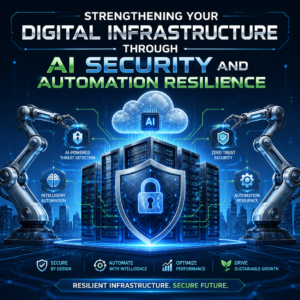
Resilience is not merely about preventing a breach; it is about building systems that can withstand, detect, and recover from a breach without catastrophic failure. As we move deeper into the decade, the definition of “security” must evolve to include the integrity of our automated logic.
1. Moving Beyond Perimeter Defense to Zero Trust
The ServiceNow flaw was particularly dangerous because it involved *unauthenticated* access. In the past, businesses focused on “perimeter security”—building a massive wall around their network. But in a world of cloud-based SaaS (Software as a Service) and decentralized AI tools, there is no single wall.
The “Zero Trust” model assumes that the perimeter has already been breached. Under Zero Trust, every request for access—whether it comes from a CEO or an automated script—must be continuously verified. When building automations, this means ensuring that your n8n workflows, for instance, use scoped API keys that only have the absolute minimum permissions required to perform their specific task.
2. The Importance of Data Integrity in AI Workflows
As businesses implement AI-driven decision-making, the “input” becomes just as important as the “algorithm.” If your automation workflows rely on data from a third-party platform, you must implement validation layers.
Think of this as a “digital immune system.” Before an AI agent processes data retrieved from a service like ServiceNow, there should be an automated check to ensure the data follows expected patterns and hasn’t been tampered with. Building these validation steps into your n8n workflows is a cornerstone of AI Security and Automation Resilience.
3. Monitoring the “Shadow AI” Problem
Just as “Shadow IT” (employees using unauthorized software) was a major risk in the 2010s, “Shadow AI” is the major risk of the 2020s. This occurs when departments implement their own AI tools or automated scripts without the knowledge or oversight of the IT or security teams.
These “rogue” automations often lack the security protocols necessary to protect company data. A single unvetted AI browser extension or a “quick” Zapier integration can create a massive hole in your organization’s security posture. Centralizing your automation strategy through professional consulting ensures that every new “efficiency” doesn’t become a new “vulnerability.”
Practical Takeaways for Business Leaders
How can you, as a tech-forward leader, protect your organization against these emerging threats while still reaping the rewards of automation? Here is a strategic checklist:
- Audit Your “Automated Attack Surface”: List every piece of software that has the power to trigger a business process. Identify which of these are “high-value targets” (like ServiceNow, Salesforce, or AWS) and verify their current security configurations.
- Implement the Principle of Least Privilege (PoLP): Ensure that every automated bot, AI agent, and API connection has the minimum amount of access required. An automation that only needs to read a ticket should never have the permission to delete a user.
- Validate Data at the Gate: Do not trust data simply because it came from a known source. Build “sanity checks” into your workflows to ensure the incoming data is structured correctly and falls within expected parameters.
- Invest in Human-in-the-Loop (HITL) Systems: For high-stakes decisions (financial transfers, legal communications, significant resource allocation), never allow a fully autonomous AI loop. Always include a human checkpoint to verify the AI’s output.
- Prioritize Resilience Over Mere Efficiency: When evaluating new AI tools, don’t just ask, “How much time will this save us?” Ask, “If this tool is compromised, how much damage can it do, and how quickly can we shut it down?”
How AI TechScope Empowers Secure Digital Transformation
At AI TechScope, we understand that the ultimate goal of business technology is to create a competitive advantage through efficiency and scale. However, we also know that true scale is impossible without stability and security. We don’t just build automations; we build resilient ecosystems.
Our approach to AI Security and Automation Resilience is integrated into every service we provide:
Intelligent n8n Workflow Development
We specialize in creating sophisticated, multi-step automations using n8n. Unlike basic “if-this-then-that” tools, our n8n workflows are engineered with enterprise-grade security in mind. We implement rigorous error handling, credential scoping, and data validation steps to ensure that your automations are not only fast but also robust against unexpected data or system fluctuations.
Expert AI Consulting
The transition to an AI-driven business can be overwhelming. Our consulting services help you navigate the complex landscape of AI integration. We help you identify the most impactful areas for automation while simultaneously conducting “risk audits” to ensure your new AI implementations don’t introduce unforeseen vulnerabilities. We help you build a roadmap for digital transformation that balances innovation with institutional security.
Robust Website and Digital Infrastructure Development
Your website is often the first point of contact for both customers and potential attackers. We develop high-performance, secure websites that serve as a stable foundation for your digital operations. By integrating secure data capture methods and protecting your digital storefront, we ensure that your growth is built on solid ground.
Conclusion: Building for the Future
The ServiceNow vulnerability is a wake-up call. It reminds us that in our rush to automate the mundane and empower the extraordinary with AI, we must not overlook the integrity of the systems that hold it all together. The era of the “move fast and break things” mentality is being replaced by an era of “move fast with resilience.”
As you continue to lead your organization through the currents of digital transformation, remember that efficiency and security are not opposing forces—they are two sides of the same coin. A highly efficient process that is insecure is not an asset; it is a liability. By prioritizing AI Security and Automation Resilience, you are not just protecting your data; you are protecting your reputation, your customers, and your future.
Ready to scale your business with confidence?
Don’t leave your automation to chance. At AI TechScope, we help you harness the power of AI and n8n automation to drive unprecedented efficiency, all while maintaining the highest standards of operational integrity. Whether you need to optimize a complex workflow, implement a custom AI solution, or build a secure digital presence, our experts are here to guide you.
Explore AI TechScope’s AI Automation and Consulting Services Today — Let’s build a smarter, faster, and more resilient future together.
Frequently Asked Questions
What is Automation Resilience?
Automation resilience refers to the ability of automated systems and workflows to withstand, detect, and recover from disruptions or failures without causing catastrophic operational or data integrity issues.
How does data poisoning affect AI?
Data poisoning involves feeding manipulated or incorrect data into AI training or operational workflows. This can cause the AI to learn false patterns, leading to biased outputs, incorrect predictions, or disastrous business decisions.
What is the Zero Trust model?
The Zero Trust model is a security framework that operates on the principle of “never trust, always verify.” It assumes that threats can exist both outside and inside the network, requiring continuous verification of every user and device attempting to access resources.
Why is the Principle of Least Privilege important for automations?
Applying the Principle of Least Privilege (PoLP) ensures that automated systems and AI agents only have the minimum permissions necessary to perform their intended functions. This significantly limits the potential damage if an automation is compromised, preventing unauthorized access or malicious actions beyond its scope.
What is “Shadow AI”?
Shadow AI refers to the use of AI tools or automated scripts by individuals or departments within an organization without the explicit knowledge, approval, or oversight of the IT or security teams. This can lead to security vulnerabilities and data governance issues.