
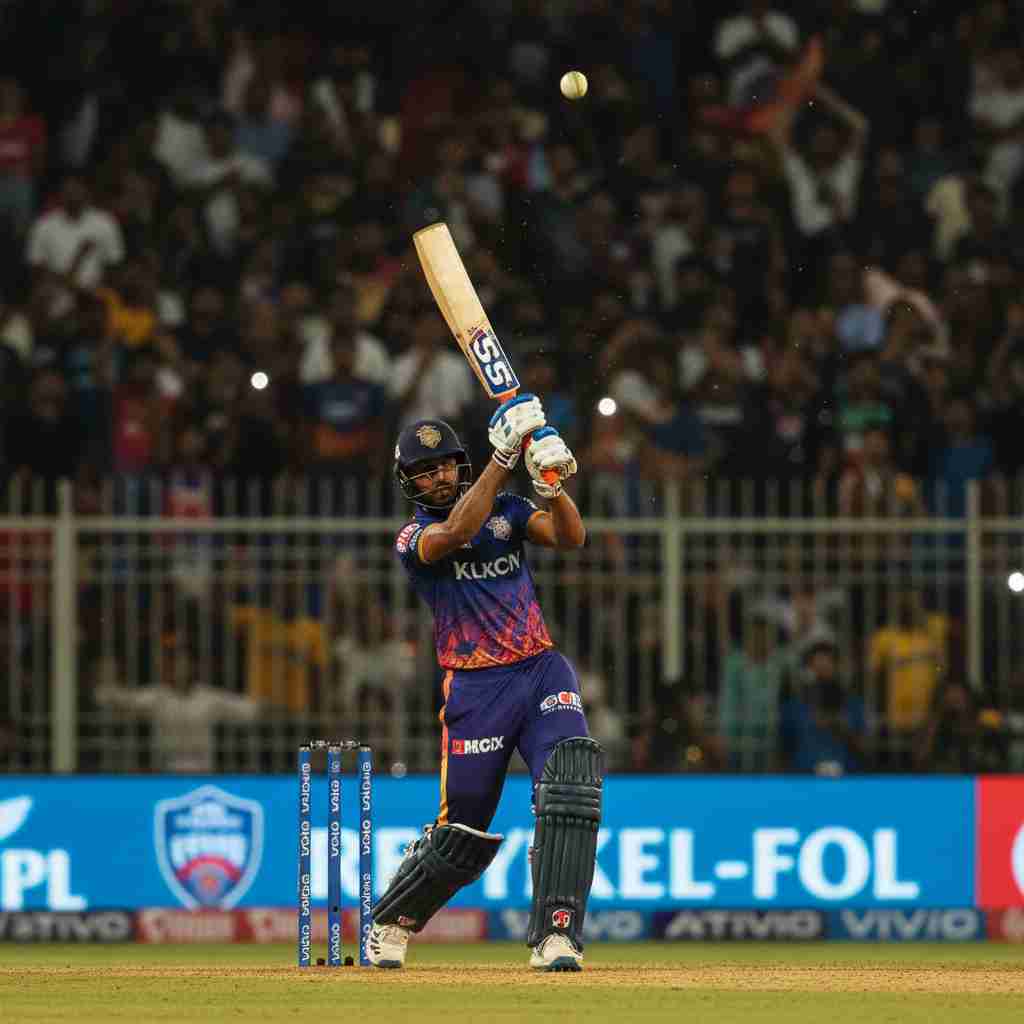
Rinku Singh’s T20 World Cup Snub: A Strategic Shift Towards All-Rounders?
Table of Contents
- The Shockwave of Omission: Rinku Singh’s T20 World Cup Snub
- Rinku Singh: The Unparalleled Finisher India Almost Had
- The Evolving Landscape of T20 Cricket: Beyond Specialist Finishers
- India’s New Blueprint: The Ascendancy of Versatile All-Rounders
- Dissecting the Squad: Who Benefited from the Strategic Pivot?
- Pros and Cons of India’s All-Rounder Focused T20 Strategy
- The Future of Indian T20 Cricket: What Rinku Singh’s Snub Means
- Conclusion: A Calculated Gamble or a Missed Opportunity?
The Shockwave of Omission: Rinku Singh’s T20 World Cup Snub
The announcement of India’s squad for the upcoming T20 World Cup sent ripples across the cricketing world, particularly among fans and pundits who had closely followed the meteoric rise of one player: Rinku Singh. His name, conspicuously absent from the main fifteen-man roster, sparked immediate debate and introspection. For a player who had consistently delivered explosive performances as a specialist finisher, embodying the very essence of modern T20 batting with his audacious power-hitting and nerveless demeanor under pressure, Rinku Singh’s T20 World Cup snub came as a significant surprise. This decision, far from being an isolated incident, appears to signal a profound strategic shift by the Indian team management. The question on everyone’s lips is whether this omission reflects a deliberate move away from relying on specialist finishers, like Rinku, towards an emphasis on more versatile all-rounders who offer multiple facets to the team’s composition. This article delves deep into the implications of this decision, analyzing whether India is indeed charting a new course in its T20 World Cup strategy, prioritizing multi-dimensional players over singular specialists, and what this means for the future of Indian cricket.
Rinku Singh: The Unparalleled Finisher India Almost Had
To understand the magnitude of Rinku Singh’s T20 World Cup snub, one must first appreciate the phenomenon he had become. Rinku Singh wasn’t just a batsman; he was a ‘clutch player,’ a ‘finisher extraordinaire,’ a man who consistently turned improbable situations into memorable victories. His exploits for Kolkata Knight Riders in the Indian Premier League (IPL) catapulted him into national reckoning, where he continued to impress with every outing. His ability to launch colossal sixes, manipulate the field, and maintain a calm head in chaotic final overs made him an invaluable asset. He possessed a rare combination of power, precision, and temperament – qualities essential for a top-tier finisher in the shortest format of the game. Fans had grown accustomed to his audacious stroke play, expecting fireworks every time he walked out to bat in the death overs. His strike rate in the death overs for KKR and for India in T20Is has been exceptional, often exceeding 200, showcasing his unparalleled ability to accelerate the scoring when it matters most. It’s this consistent, high-impact performance that makes his exclusion from the T20 World Cup squad so perplexing to many. The narrative around India’s T20 World Cup strategy often revolved around finding such an explosive finisher, and Rinku perfectly fit that mould.
A Glimpse at Rinku’s Impact
- **Consistent Strike Rate:** Maintained a T20I strike rate well over 170, a testament to his aggressive approach.
- **Death Overs Dominance:** Consistently delivered high-impact innings in the last five overs, often single-handedly changing the momentum of games.
- **Match-Winning Performances:** Numerous instances of pulling off sensational chases and providing crucial late impetus for his teams.
- **Temperament under Pressure:** Displayed remarkable composure, particularly in high-stakes situations, earning him the moniker of a reliable finisher.
The Evolving Landscape of T20 Cricket: Beyond Specialist Finishers
The global T20 landscape has undergone a significant transformation in recent years. What once began as a format dominated by power-hitters and specialist bowlers has evolved into a more nuanced game demanding greater versatility. Teams are increasingly looking for players who can contribute in multiple departments, blurring the lines between traditional roles. The idea of a ‘specialist finisher,’ while still potent, is now being re-evaluated against the backdrop of team balance and flexibility. Modern T20 strategy dictates that every player, ideally, should be able to bat, bowl, or field at an elite level. This philosophy reduces reliance on any single individual and provides captain and coach with more options throughout the innings. For instance, a batsman who can chip in with a couple of overs of useful bowling, or a bowler who can smash quick runs down the order, adds immense value that a pure specialist might not. This shift in thinking perhaps plays a crucial role in understanding the rationale behind Rinku Singh’s T20 World Cup snub, suggesting that India might be aligning itself with this global trend of fostering multi-faceted cricketers.
India’s New Blueprint: The Ascendancy of Versatile All-Rounders
India’s team selection for the T20 World Cup suggests a clear and deliberate pivot towards an all-rounder heavy strategy. This isn’t just about having one or two multi-utility players; it’s about building a squad where several individuals can bat at various positions and offer valuable bowling options. This approach inherently creates a deeper batting line-up and more diverse bowling attack, allowing for greater tactical flexibility during matches. The emphasis is now seemingly on players who can hit big runs while also providing crucial overs, or contribute with exceptional fielding, thereby raising the overall athleticism and utility of the squad. This strategic reorientation appears to be the primary driver behind decisions like Rinku Singh’s T20 World Cup snub, as the selectors seem to have prioritized players who bring a complete skill set to the table, rather than excelling in just one specific area, however brilliantly.
Hardik Pandya and Shivam Dube: The Pillars of Versatility
Central to India’s new strategy are players like Hardik Pandya and Shivam Dube. Hardik Pandya, the vice-captain, is arguably the most important all-rounder in the Indian setup. His ability to bowl four crucial overs at good pace and his destructive hitting prowess in the middle and death overs make him an indispensable asset. He provides the balance that allows India to play an extra batsman or bowler, depending on the conditions. Similarly, Shivam Dube has emerged as a powerful left-handed hitter capable of clearing boundaries with ease, and he can also bowl medium-pace, offering another dimension to the attack. His form in the IPL, particularly against spin, has cemented his place, suggesting that his all-round capabilities were seen as more valuable than a pure finisher’s role, leading indirectly to situations like Rinku Singh’s T20 World Cup snub. These players exemplify the kind of multi-skilled cricketer India seems to be betting on for global tournaments.
Ravindra Jadeja and Axar Patel: Dual-Threat Spin All-Rounders
Beyond the pace-bowling all-rounders, India also boasts a formidable contingent of spin-bowling all-rounders in Ravindra Jadeja and Axar Patel. Both left-arm orthodox spinners are exceptional in their primary role of stifling runs and picking wickets, but crucially, they are also highly competent batsmen capable of scoring quick runs down the order. Jadeja, with his vast experience and incredible fielding, brings a complete package. Axar Patel, on the other hand, has shown consistent improvement with the bat, often playing crucial cameos and providing depth. The presence of two such players allows India to maintain a strong bowling attack while ensuring the batting line-up doesn’t end abruptly. Their inclusion underlines the broader philosophy shaping India’s T20 World Cup strategy, where every player is expected to contribute significantly in at least two departments, further highlighting why a specialist like Rinku Singh might have been overlooked.
Dissecting the Squad: Who Benefited from the Strategic Pivot?
A closer look at the selected squad reveals the practical application of India’s new T20 World Cup strategy. The selectors opted for a robust middle order featuring batsmen who can anchor, accelerate, and finish, often with a secondary skill. The likes of Suryakumar Yadav, Rishabh Pant, and Sanju Samson bring explosive batting, but the key difference lies in the balance provided by the all-rounders. Hardik Pandya and Shivam Dube’s inclusion as frontline all-rounders means India has more genuine bowling options than if they had solely picked specialist batsmen. Furthermore, the inclusion of three frontline spinners – Ravindra Jadeja, Axar Patel, and Kuldeep Yadav – with Jadeja and Axar doubling as capable batsmen, reinforces the multi-dimensional approach. While Rinku Singh’s finishing prowess is undeniable, the selectors seemingly weighed it against the broader utility offered by others. This wasn’t necessarily a critique of Rinku’s abilities but rather a reflection of a different strategic priority. The squad composition emphasizes flexibility, offering captain Rohit Sharma numerous permutations for both batting and bowling, ensuring the team is well-equipped to handle diverse match situations and conditions. This broader view explains why Rinku Singh’s T20 World Cup snub occurred despite his stellar form.
Pros and Cons of India’s All-Rounder Focused T20 Strategy
Advantages of a Multi-Dimensional Approach
- **Enhanced Team Balance:** More all-rounders provide a stronger equilibrium between batting and bowling, allowing for deeper batting line-ups and more varied bowling attacks.
- **Increased Tactical Flexibility:** Captains can adapt more easily to changing match situations, pitch conditions, and opposition strengths by shuffling batting orders or introducing different bowling options.
- **Reduced Pressure on Key Players:** With multiple players capable of contributing across departments, the pressure on star performers is distributed, leading to more consistent team performances.
- **Improved Fielding:** Often, all-rounders are also exceptional fielders, raising the overall fielding standards of the team, which is crucial in tight T20 encounters. This comprehensive approach, in a way, contributed to Rinku Singh’s T20 World Cup snub, as others offered this added value.
Potential Drawbacks and Unanswered Questions
- **Lack of a Pure Finisher:** The primary concern stemming from Rinku Singh’s T20 World Cup snub is the potential absence of a dedicated, consistent death-overs specialist who thrives under extreme pressure. While all-rounders can hit, replicating Rinku’s consistency and audacious power might be a challenge.
- **Over-Reliance on All-Rounder Form:** If the primary all-rounders fail to fire with both bat and ball, the team’s balance could quickly unravel, exposing potential weaknesses.
- **Defined Roles vs. Fluidity:** While versatility is good, sometimes clear, defined roles (like a specialist finisher) can offer clarity and confidence to players, especially in high-pressure tournaments.
- **Bench Strength for Specific Roles:** Should an all-rounder get injured, finding a like-for-like replacement who offers the same multi-faceted contribution might be challenging.
The Future of Indian T20 Cricket: What Rinku Singh’s Snub Means
Rinku Singh’s T20 World Cup snub serves as a powerful message to aspiring cricketers in India: excelling in just one aspect of the game, however brilliantly, might no longer be sufficient for selection in major tournaments. The focus has undeniably shifted towards creating a squad comprising multi-utility players who can seamlessly transition between batting, bowling, and fielding roles. This strategic evolution suggests that India aims to build a more resilient, adaptable, and flexible T20 unit, capable of competing effectively in diverse conditions against various opponents. It implies a long-term vision where young players coming through the ranks will be encouraged to develop a wider array of skills rather than specializing too early. For Rinku Singh himself, this means he must continue to refine his game, perhaps even exploring options to add a bowling dimension to his already formidable batting, to align with India’s evolving T20 World Cup strategy. The decision could well shape how India approaches T20 cricket for years to come.
Conclusion: A Calculated Gamble or a Missed Opportunity?
The omission of Rinku Singh from India’s T20 World Cup squad is more than just a selection decision; it’s a statement of intent. It unequivocally signals a strategic shift by the Indian team management towards prioritizing versatile all-rounders over specialist finishers. While the allure of Rinku Singh’s explosive batting and his proven ability to close out games is undeniable, the team appears to have opted for a more balanced and flexible approach, believing that multi-dimensional players offer a greater safety net and more tactical options. Whether this calculated gamble will pay off on the grandest stage remains to be seen. The success of India’s campaign will ultimately determine the wisdom of this strategic pivot. Regardless of the outcome, Rinku Singh’s T20 World Cup snub has ignited a crucial conversation about the direction of Indian T20 cricket, underscoring the relentless evolution of the shortest format and the ever-changing demands it places on its elite players. It highlights a fascinating dilemma: the trade-off between singular brilliance and collective versatility, a choice India has now firmly made for its T20 World Cup challenge.